Finding Clarity with Purpose Finding Prompts: A Practical Guide to Self-Discovery Tools
Many adults in their twenties, thirties, and forties reach a point where they ask themselves, “What do I actually want from my life?” Whether you are navigating a career transition, re-evaluating personal goals, or simply feeling the pull toward a more intentional routine, the search for purpose can feel both urgent and elusive. Purpose-finding resources come in many forms—structured courses, one-on-one coaching, free online quizzes, and guided journals. Among these, Purpose Finding Prompts stands out as a direct, self-paced workbook built around 300 reflection questions. But how does it compare with other approaches? And is it the right fit for your current stage of personal development?
What Purpose Finding Prompts Offers
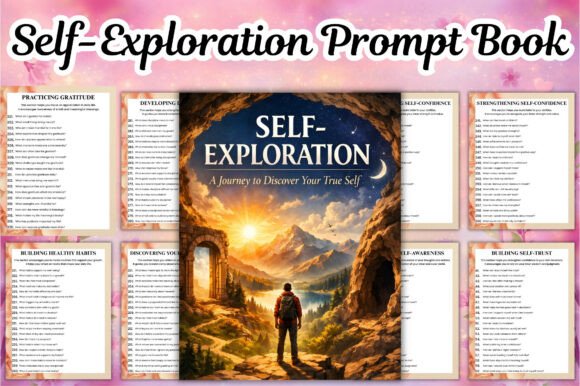
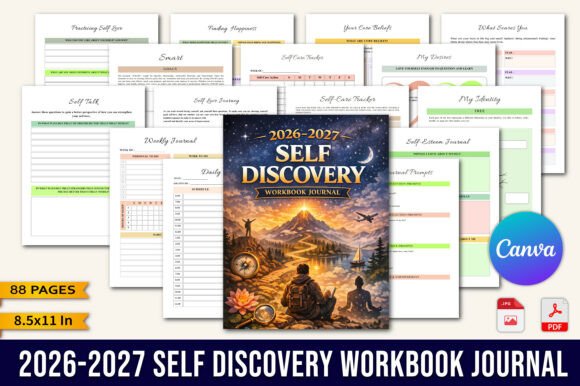
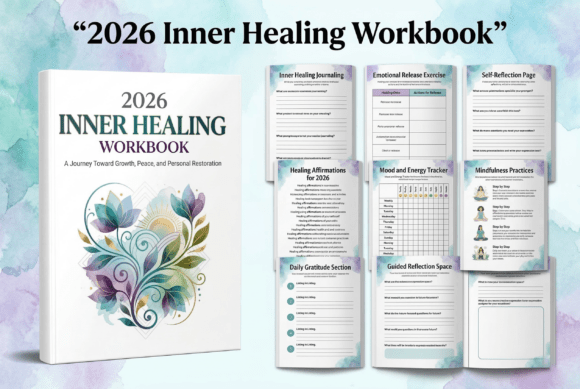
Purpose Finding Prompts is a printable or digital journal that contains 300 guided prompts organized around life direction, personal values, passions, strengths, self-awareness, goal clarity, and vision building. It comes as a PDF, JPG, PNG, and Canva link, which means you can use it on a tablet, print it at home, or customize it before printing. The format is intentionally loose: there are no rigid timelines, no video lessons, and no external accountability structures. Instead, the journal relies on your willingness to sit with open-ended questions and write honestly.
What makes this resource distinct is its volume and variety of prompts. With 300 questions, you are unlikely to exhaust the material quickly. The prompts are meant to be revisited, which suits someone who prefers to return to the same topic from different angles over weeks or months. The journal does not assume you already know your values; instead, it guides you through exercises that help you uncover them gradually.
How Purpose Finding Prompts Compares with Other Purpose-Discovery Approaches
To decide whether Purpose Finding Prompts is the right tool for you, it helps to see how it stacks up against common alternatives. Each approach has a different combination of structure, depth, cost, and flexibility.
Compared with Free Online Quizzes and Lists
A quick internet search yields dozens of “find your purpose” quizzes and articles with five or ten questions. These are useful for a quick mood check or to spark initial curiosity. However, they rarely push beyond surface-level answers. A ten-question quiz might ask what you would do if money were no object, but it does not help you untangle why that answer feels true or how to reconcile it with your current responsibilities. Purpose Finding Prompts goes deeper because it offers 300 prompts that circle around the same core questions from multiple directions. For example, one prompt might ask about a moment you felt fully alive, while another asks what you would regret not doing in five years. Together, these create a layered self-portrait that a single quiz cannot provide.
Best fit for free quizzes: Casual exploration or a low-stakes starting point.
Best fit for Purpose Finding Prompts: Ongoing, reflective work when you want to move past surface answers.
Compared with Therapy or Life Coaching
Professional guidance from a therapist or a life coach offers personalized feedback, accountability, and expert facilitation. A coach can help you challenge blind spots and hold you accountable for action steps. However, coaching and therapy require a financial commitment (often $100–$300 per session) and scheduled time. Purpose Finding Prompts cannot replace that human dynamic, but it can complement it. Many people use a guided journal between sessions to clarify what they want to discuss with their coach. The journal is also a lower-cost option—a one-time purchase—that you can use at your own pace, which matters if your budget or schedule does not allow ongoing sessions.
Best fit for coaching or therapy: When you need outside perspective, personalized feedback, or professional support for mental health concerns.
Best fit for Purpose Finding Prompts: Self-directed exploration, supplemental work between sessions, or when coaching is not accessible.
Compared with Unstructured Journaling
Journaling on your own has many benefits: total freedom, no prompts, and the ability to follow wherever your thoughts lead. But many people find that without structure, they write about surface-level events or vent frustrations without ever addressing deeper values. Unstructured journaling can become repetitive or avoidant. Purpose Finding Prompts provides scaffolding. Instead of asking “What is my purpose?” (a question that can feel paralyzingly broad), it breaks the question into manageable pieces—your strengths, your past experiences, what energizes you, what you avoid. For someone who has tried free journaling but felt stuck, the structure can be a welcome nudge.
Best fit for unstructured journaling: Experienced journalers who already have a reflective habit and do not need direction.
Best fit for Purpose Finding Prompts: Anyone who wants guided structure, especially those new to reflection or those who feel stuck with blank pages.
Compared with In-Person Workshops or Retreats
Weekend workshops and retreats provide immersive experiences, group discussion, and expert facilitation. They can be transformative because they remove you from daily distractions. However, they are expensive (often hundreds to thousands of dollars) and timebound. After a retreat, the insights may fade without ongoing practice. Purpose Finding Prompts is the opposite: low cost, highly flexible, and designed for repeated use over months. It cannot replicate the energy of a group setting, but it gives you a way to maintain momentum after an event or to do the work on your own terms.
Best fit for workshops or retreats: When you need a concentrated, social, or immersive experience to jump-start change.
Best fit for Purpose Finding Prompts: Sustained reflection over time, especially as a follow-up or a standalone practice.
Strengths
Volume and variety. With 300 prompts, you can spend months with this journal without repeating questions. This prevents the sense of “I already answered that” that smaller resources create. The variety also means you approach purpose from different angles—logical, emotional, experiential, aspirational—which can reveal contradictions you might otherwise miss.
Low friction. The printable and digital formats mean you can start immediately after purchase. There is no login to maintain, no course schedule, and no community to keep up with. For someone already stretched thin, that lack of overhead is a genuine advantage.
Flexibility. You can use the prompts in any order, skip questions that do not resonate, and revisit answers months later to see how your perspective has shifted. This makes the resource suitable for ongoing use rather than a one-time exercise.
Tradeoffs
No external feedback. The journal cannot tell you when you are avoiding a tough truth or when you are overthinking. It relies entirely on your honesty and self-awareness. If you tend to rationalize or gloss over discomfort, you may need to pair this tool with a trusted friend, coach, or therapist to get the most out of it.
Requires consistent motivation. Without deadlines, accountability, or community, some people set the journal aside after a week. If you know you struggle with solo, unstructured projects, consider whether you will actually return to the prompts regularly.
Broad scope. The 300 prompts cover many areas—values, passions, goals, strengths, vision—but they do not provide deep instruction on how to implement changes. This is a reflection tool, not an action plan. If you want a detailed roadmap for career change or habit formation, you may need to combine it with another resource.
When Purpose Finding Prompts Is the Right Choice
This journal works well for anyone who already values writing and self-reflection but wants more direction. It is particularly helpful if:
- You have tried general journaling but found yourself writing about daily logistics instead of deeper questions.
- You know you have values and passions but have not articulated them clearly.
- You are between life stages—graduating, changing careers, ending a relationship—and want to take stock before making big decisions.
- You prefer a one-time purchase over a subscription or ongoing commitment.
- You want a tool that travels with you (digital format) or that you can physically hold and write on (printable).
For example, consider Maya, a 34-year-old marketing manager who feels burnt out but unsure what else she wants to do. She has tried free online quizzes but found them too shallow. Therapy is not in her budget right now. She buys Purpose Finding Prompts and commits to answering three prompts a day. Over a few weeks, she notices that the questions about “times you lost track of hours” consistently point to creative work she does on weekends. That pattern helps her start a conversation with her supervisor about shifting her role. The journal did not give her a job offer, but it clarified the pattern she had been ignoring.
When You May Need Another Option
Purpose Finding Prompts may not be ideal if:
- You already have a strong reflective practice and need more action-oriented planning or accountability.
- You are experiencing significant mental health distress and need professional support, not self-guided reflection.
- You prefer talking over writing. If you process best by speaking aloud, a journal might feel frustrating or incomplete.
- You are looking for a community or group dynamic. The journal is an individual activity.
- You need a very structured program with deadlines, modules, or coaching calls. This resource is intentionally open-ended.
Dan, a 41-year-old project manager, knows he wants more meaning in his daily work but admits he rarely follows through on writing exercises. He has a stack of half-used journals. For him, a co-working accountability group or a one-time career coaching session might yield more traction than a solo journal. The prompts would likely sit unused on his hard drive.
Practical Tips for Getting the Most Out of Purpose Finding Prompts
If you decide to try the journal, a few small habits can increase its impact:
- Set a low bar. Aim for two or three prompts per session rather than trying to complete pages. Consistency matters more than volume.
- Use a dedicated time. Attach your journaling to an existing habit—morning coffee, after your walk, before bed—so it becomes routine.
- Review past answers. After a few weeks, read your earlier responses. You will often notice patterns or shifts you did not see at the time.
- Pair with a discussion partner. Even if you journal alone, sharing one insight per week with a trusted friend can add accountability and perspective.
Making Your Decision
Purpose Finding Prompts occupies a specific niche: it is a high-volume, low-structure, self-directed journal that prioritizes depth and repetition over speed. It is not a magic solution, but it is a solid tool for anyone who wants to spend sustained time clarifying what matters to them. When you compare it with free quizzes, coaching, unstructured journaling, and retreats, you see that it fits best for people who have the discipline to write regularly, the patience to revisit themes over time, and the desire for a private, flexible, and affordable resource. If that sounds like you, it can be a worthwhile addition to your personal development toolkit. If you need more guidance, accountability, or a different format, you now have a clearer sense of what to look for instead.