ABC Activity for Kids – Making Early Alphabet Learning Engaging and Effective
Teaching young children the alphabet is one of the most rewarding milestones in early education. Yet, many parents, teachers, and homeschool educators quickly discover that keeping a child’s attention long enough to practice letter recognition and handwriting can be a real challenge. Young learners thrive on repetition, but they also need variety, color, and a sense of play to stay motivated. The ABC Activity for Kids workbook is designed to meet that need, combining trace-and-color exercises with charming illustrations that make each letter feel like a discovery rather than a drill.
This article explores what this printable workbook offers, how it addresses common early-learning hurdles, and how different users can integrate it into their daily routines for meaningful progress.
What Is the ABC Activity for Kids Workbook?
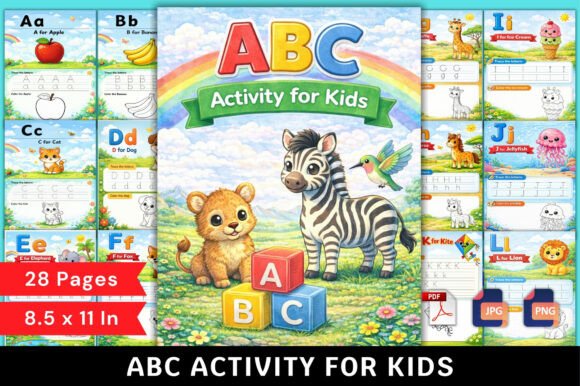
The ABC Activity for Kids resource is a printable PDF workbook containing 26 individual worksheets, one for each letter from A to Z. Every page is built around a simple but effective structure: uppercase and lowercase letter practice, a letter-tracing activity, and a matching black-and-white illustration of a cute object or animal for coloring. The design is clean and consistent, with kid-friendly cartoon illustrations that are both engaging and recognizable for preschool and kindergarten learners.
Because it’s a digital download, the workbook can be used at home, in a classroom, or on the go. You can print individual pages as needed, which makes it easy to focus on one letter at a time or to revisit letters a child finds difficult. The high-resolution print-ready format ensures that the images and letters remain sharp whether you print in color or black and white.
Common Challenges in Early Alphabet Learning
Before diving into how this workbook helps, it’s worth considering the typical obstacles that adults face when teaching the alphabet to young children.
- Short attention spans. Most preschoolers can focus on a single task for only a few minutes. If an activity feels repetitive or overly complex, they lose interest quickly.
- Fine motor skill development. Tracing letters requires control and coordination that many young children are still developing. Without supportive, guided practice, they can become frustrated.
- Letter confusion. Similar-looking letters (b/d, p/q) and reversible letters can cause confusion. Multi-sensory practice—seeing, tracing, and coloring—helps reinforce the correct shapes.
- Lack of context. Learning letters in isolation without connecting them to familiar words or images can make the process feel abstract. Children learn best when letters are tied to things they already know.
- Inconsistent practice. Busy schedules make it hard to maintain a daily routine. A resource that is easy to grab and use for a few minutes at a time helps build consistency without overwhelm.
The ABC Activity for Kids workbook addresses each of these points directly. By combining tracing with a coloring activity on the same page, it gives children a clear, achievable task that respects their natural limits while still moving them forward.
How the Workbook Supports Key Learning Goals
Every worksheet in the ABC Activity for Kids pack is designed with two primary learning objectives in mind: letter recognition and pre-writing skill development. Here’s how the format delivers on both.
Letter Tracing for Handwriting Readiness
Each page includes uppercase and lowercase versions of the featured letter, presented with clear dotted lines for tracing. This repeated exposure helps children internalize the shape of each letter, which is a critical step before they begin writing independently. The tracing paths guide the child’s hand in the correct stroke order, building muscle memory that will serve them well when they transition to writing on their own.
Coloring for Engagement and Reinforcement
Every letter page also includes a matching object or animal illustration in black-and-white outline format. For example, the letter A might pair with an apple, B with a bear, and C with a cat. Coloring the picture provides a natural break from the tracing task, keeping the activity fresh and fun. It also reinforces the letter-sound connection: the child traces the letter, then colors a picture whose name starts with that same sound. This dual-coding approach strengthens both visual and phonetic memory.
Consistent Layout for Confidence
When a child knows what to expect from page to page, they can focus their mental energy on the learning itself rather than on figuring out a new format. The ABC Activity for Kids workbook uses the same layout for every letter, so once a child completes a page or two, they can work through the rest with growing independence. This predictability is especially helpful for children who benefit from routine and structure.
Who Can Benefit from ABC Activity for Kids
One of the strengths of this printable workbook is its versatility. Different users will find different ways to make it work for their specific setting.
- Preschool and kindergarten teachers can use individual worksheets as part of a letter-of-the-week curriculum. The pages work well for morning work, literacy centers, or as a quiet activity during transitions. Because the worksheets are print-ready, teachers can prepare a stack for the entire class in minutes.
- Homeschool educators often need resources that can be adapted to multiple children at different skill levels. The ABC Activity for Kids workbook fits easily into a relaxed homeschool routine. You can print a page for the day, pair it with a read-aloud book featuring that letter, and extend the learning with a simple craft or snack related to the same object.
- Parents looking to supplement school learning will appreciate how easy it is to use at home. Whether you’re working with a child who needs extra practice, or you simply want to support what they’re learning in the classroom, the workbook gives you a ready-made activity that requires no prep beyond pressing print.
- Daycare providers and early childhood centers can use the worksheets as part of a quiet-time or small-group activity. The coloring component makes it especially appealing for mixed-age groups, where younger children can focus on coloring while older children work on tracing.
Practical Tips for Using the Workbook Effectively
To get the most out of the ABC Activity for Kids workbook, consider how you structure each session and how you can expand on the learning beyond the page itself.
Start With a Child’s Name
If a child is just beginning to learn letters, start with the first letter of their own name. This personal connection creates instant engagement. Once they master that page, move on to other letters at a comfortable pace.
Pair Each Page With a Real Object
When possible, bring a physical object that matches the illustration on the worksheet. For example, when working on the letter B, place a toy bear or a banana next to the page. Let the child see, touch, and name the object before tracing and coloring. This sensory connection deepens the learning.
Use the Pages in Small Batches
You don’t need to print all 26 pages at once. Print a few at a time to avoid overwhelm. Some children enjoy going through the letters in order from A to Z, while others prefer to jump around. Follow the child’s lead while keeping the sessions short—aim for about 10 to 15 minutes per day.
Encourage Independent Work After Modeling
For the first few pages, sit with the child and demonstrate how to trace the letter, then let them try. Once they understand the routine, many children will happily complete a page on their own while you attend to other tasks nearby. This builds confidence and a sense of accomplishment.
Store Completed Pages as a Portfolio
Consider keeping each finished worksheet in a binder or folder. Over time, the child will have their own alphabet book to flip through. This not only reinforces their learning but also provides a tangible record of progress that you can share with family members or use in parent-teacher conversations.
Long-Term Outcomes and Developmental Benefits
When used consistently, the ABC Activity for Kids workbook supports several important developmental milestones that extend beyond letter recognition alone.
Fine motor skills improve as children practice holding a pencil or crayon and controlling its movement along tracing paths. This foundational skill is essential for all future writing and drawing tasks. The act of coloring within lines also develops hand-eye coordination and spatial awareness.
Phonemic awareness—the ability to hear and identify the sounds that letters make—is strengthened every time a child traces the letter and then colors an object that begins with that sound. Over the course of 26 pages, children build a mental library of letter-sound associations that will serve them well when they begin reading.
Confidence grows as children complete pages independently. Each finished worksheet is a small victory that says, “I can do this.” That positive reinforcement encourages them to approach new learning tasks with a growth mindset.
The workbook also fosters a love for learning through play. When an educational activity feels like fun, children are more likely to engage with it willingly, which leads to better retention and less resistance during future learning sessions.
Final Thoughts on the ABC Activity for Kids Workbook
Early alphabet learning doesn’t have to be a struggle between a well-meaning adult and a restless child. With the right tools, it can be a shared experience that feels like play while delivering real educational value. The ABC Activity for Kids printable workbook is a thoughtfully designed resource that respects the needs of both the learner and the teacher. Its simple, repeatable format, engaging illustrations, and focus on both tracing and coloring make it a practical addition to any early learning environment.
Whether you are a teacher preparing classroom materials, a homeschool parent building a curriculum from scratch, or a parent looking for meaningful after-school activities, this workbook offers a straightforward path to helping children recognize letters, improve their handwriting, and develop confidence in their own abilities. And because it’s printable, you always have the flexibility to print exactly what you need, when you need it.
The journey through the alphabet is one of the first big learning adventures a child will take. Making it colorful, hands-on, and full of small wins is the best way to ensure that adventure ends with a love for letters—and a readiness for everything that comes next.