Caregiver Planner, KDP Interior Care Log: A Strategic Tool for Organized Care Management
Managing care for another person is rarely straightforward. Whether you are a professional caregiver, a family member supporting a loved one, or a publisher creating resources for the caregiving community, the need for structure is constant. The Caregiver Planner, KDP Interior Care Log is designed to address that need directly. This is not merely a collection of blank pages. It is a complete, ready-to-upload interior for Amazon KDP that includes 120 pages of carefully structured logs, trackers, and checklists. Understanding what this planner offers, how to use it strategically, and why it matters can make a real difference in both care outcomes and publishing success.
What the Caregiver Planner, KDP Interior Care Log Contains
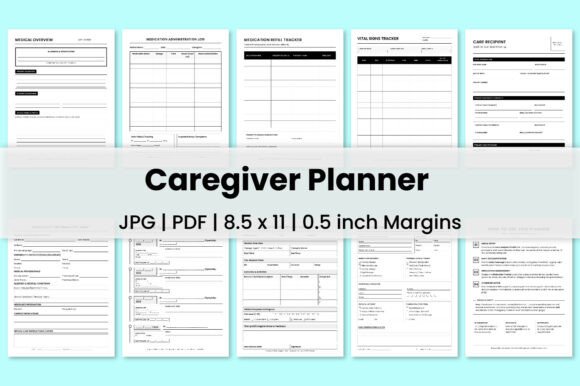
The interior is built around 11 distinct sections, each serving a specific purpose in the care management workflow. The file package includes 11 PNG files and 1 high-resolution PDF at 300 dpi, sized at 8.5″ x 11″ with no bleed. This makes it immediately ready for KDP upload. Let us walk through each section and what it contributes to the overall planner.
Caregiver Overview and How to Use This Planner
The first two pages set the foundation. The Caregiver page establishes the purpose and ownership of the log. The How to Use This Planner page provides guidance on how to approach the document, which is especially valuable for users who may be new to structured care tracking. From a publisher perspective, this section increases the usability of the product, reducing the likelihood of returns or negative reviews from confused buyers.
Care Recipient and Medical Overview
The next two pages focus on the person receiving care. The Care Recipient page captures essential personal details, preferences, and background information. The Medical Overview page offers space to summarize diagnoses, allergies, ongoing conditions, and key medical history. These pages serve as a quick reference that any caregiver, nurse, or family member can consult in moments of uncertainty.
Emergency Information Sheet
Emergencies demand immediate access to critical data. This single page is designed to hold contact numbers, insurance details, doctor information, and emergency protocols. Having this information in one place, rather than scattered across multiple documents or devices, can save precious time when every second counts.
Medication Administration Log (19 pages)
Medication errors are among the most common and dangerous risks in caregiving. With 19 dedicated pages, this log allows for detailed tracking of each dose administered, including time, dosage, route, and any observed reactions. For caregivers managing multiple medications or complex schedules, this section alone justifies the planner. It provides an auditable trail that can be shared with doctors, pharmacists, or home health agencies.
Medication Refill Tracker (19 pages)
Running out of a critical medication is avoidable with proper tracking. These 19 pages are designed to monitor refill dates, pharmacy contact information, prescription numbers, and next refill due dates. This proactive approach reduces the risk of gaps in treatment and the stress of last-minute pharmacy runs.
Appointment Timeline (19 pages)
Coordinating appointments with multiple specialists, therapists, and primary care providers is a logistical challenge. The 19-page appointment timeline allows users to record dates, times, locations, providers, and notes from each visit. This creates a chronological record that can help identify patterns in care, track follow-up requirements, and ensure nothing falls through the cracks.
Vital Signs Tracker (19 pages)
Tracking blood pressure, heart rate, temperature, oxygen saturation, weight, and other vital signs over time provides valuable data for medical decision-making. The 19 pages in this section offer structured fields for daily or weekly entries, making it easy to spot trends or sudden changes that might require medical attention.
Therapy Rehabilitation Tracker (19 pages)
For individuals undergoing physical therapy, occupational therapy, or other rehabilitation programs, consistent tracking is essential. These 19 pages allow caregivers to document exercises, progress, setbacks, and therapist instructions. This information helps ensure that rehabilitation goals remain on track and that exercises are performed correctly between sessions.
Daily Care Checklist (20 pages)
The final and largest section, with 20 pages, is the daily care checklist. This is the workhorse of the planner. It covers morning, afternoon, and evening routines, including hygiene, meals, mobility, medication, and emotional well-being. A well-designed daily checklist reduces cognitive load for caregivers and ensures consistency in care delivery.
Why Thoughtful Use of This Planner Supports Better Care Outcomes
A planner is only as good as the consistency with which it is used. The Caregiver Planner, KDP Interior Care Log is strategically useful because it addresses the most common pain points in care management: information fragmentation, medication errors, missed appointments, and lack of communication between caregivers. When used regularly, it becomes a single source of truth that everyone involved in the care journey can rely on.
For family caregivers who may be juggling work, personal life, and care responsibilities, this planner reduces the mental burden of remembering every detail. For professional caregivers and nurses, it provides documentation that supports continuity of care and legal compliance. For publishers and KDP creators, it offers a product that meets a genuine, recurring need with a clear audience.
For Family Caregivers
Caring for an aging parent or a spouse with a chronic condition often involves managing appointments, medications, and daily routines across multiple people. The planner gives you a centralized system that can be shared with other family members or home health aides. Use the Medication Administration Log to prevent double-dosing or missed doses. Use the Vital Signs Tracker to provide your doctor with concrete data rather than vague recollections.
For Professional Caregivers and Nurses
If you work in home health, assisted living, or private duty care, documentation is a professional requirement. This planner provides ready-made templates that meet common documentation standards. The Daily Care Checklist and Therapy Rehabilitation Tracker are especially useful for creating shift reports and progress notes that can be reviewed by supervisors or family members.
For KDP Publishers and Content Creators
If you are building a catalog of low-content or medium-content books on Amazon, this interior is designed specifically for KDP upload. With no bleed, the correct 8.5″ x 11″ trim size, and high-resolution 300 dpi files, it passes Amazon's technical requirements without additional formatting work. The 120-page count positions it well in a competitive price range while offering substantial perceived value. You can customize the cover and title to target specific niches such as dementia care, hospice care, pediatric caregiving, or post-surgery recovery.
For Small Business Owners in Senior Care or Home Health
If you run a small home care agency, providing this planner to your caregivers can standardize documentation across your team. It also serves as a thoughtful gift to clients or their families, demonstrating your commitment to organized, transparent care. Customizing the cover with your branding can turn a generic planner into a client-facing tool that reinforces your professionalism.
When and How to Approach Using This Planner
Timing matters. If you are a caregiver, start using the planner immediately after a new diagnosis, a hospital discharge, or a change in medication regimen. These are moments when information is most fluid and the risk of error is highest. Beginning with the Care Recipient page and Medical Overview creates a foundation. Then add the Medication Administration Log and Appointment Timeline as ongoing sections. The Daily Care Checklist can be introduced gradually as routines become established.
If you are a publisher, consider launching this planner alongside complementary titles such as a meal planner for special diets, a symptom journal, or a communication log for non-verbal patients. Bundling or cross-promoting related planners can increase average order value and build a more comprehensive brand presence in the caregiving category.
What to Consider Before Relying on a Care Log
No planner, no matter how well designed, replaces professional medical advice or emergency response. The Caregiver Planner, KDP Interior Care Log is a tool for organization and documentation, not a substitute for clinical judgment. Caregivers should always consult healthcare providers regarding medication changes, symptom interpretation, and treatment decisions.
Another consideration is consistency. A planner that is filled out sporadically loses its value. If you or your team cannot commit to daily or weekly entries, the data will have gaps that reduce its usefulness. For publishers, this means the customer's success with the product depends on their own habits. Including a How to Use This Planner page and perhaps a brief usage guide in the product description helps set realistic expectations.
Privacy is also a concern. Care logs contain sensitive health information. Users should store the planner in a secure location and consider using codes or abbreviations for particularly sensitive details. Digital backups are not included in this physical log, so maintaining a photocopy or scanned version may be wise for long-term records.
Possible Risks of Using a Caregiver Planner Without Clear Goals
Using a planner without understanding what you are trying to achieve can lead to wasted effort and a false sense of security. If you fill out the Medication Refill Tracker but never review it, refills may still be missed. If you record vital signs but do not share them with a doctor, the data serves little purpose. The planner is most effective when paired with a clear care plan and regular review of the information collected.
Another risk is information overload. With 120 pages and 11 sections, it is tempting to try to use everything at once. This can overwhelm the caregiver and lead to abandonment of the system. A better approach is to start with two or three sections that address the most pressing needs and add others as the habit of logging becomes routine.
Using the Planner Intentionally Rather Than Randomly
Intentional use begins with asking a few questions before you start. What is the primary goal of using this log? Is it to prevent medication errors? To track recovery progress after surgery? To communicate more effectively with multiple doctors? To provide documentation for insurance or legal purposes? Each goal suggests a different emphasis within the planner.
For example, if the goal is medication safety, prioritize the Medication Administration Log and Medication Refill Tracker above all other sections. If the goal is rehabilitation tracking, focus on the Therapy Rehabilitation Tracker and Vital Signs Tracker. If the goal is general daily care coordination, the Daily Care Checklist and Appointment Timeline will be your most used sections. Let your specific situation guide which pages you use and how often.
For publishers, intentional use means targeting your product description and keywords to the specific audience most likely to benefit. A generic title may attract views but fewer conversions. Using terms like "medication log," "daily care checklist for elderly parents," or "home health aide log book" connects the planner with searchers who have a specific problem to solve.
Long-Term Value of a Structured Care Log
Over weeks and months, a consistently used care log becomes a historical record. This record can reveal patterns that might otherwise go unnoticed. Perhaps a certain medication consistently causes a spike in blood pressure. Perhaps therapy progress plateaus after a specific number of sessions. Perhaps certain days of the week are associated with missed appointments or medication errors. These insights are only possible when data is recorded over time.
For family caregivers, this record can also be a way to share the care journey with distant relatives or future caregivers. When a new home health aide joins the team, handing them a filled-out planner can accelerate their understanding of the care recipient's needs, preferences, and routines.
For KDP publishers, long-term value lies in the planner's evergreen nature. Caregiving is not a trend; it is a constant human need. A well-designed interior like this one can generate passive income for years with minimal updates, especially if you create multiple cover variations targeting different caregiving niches.
Practical Tips for Getting the Most Out of This Planner
Keep the planner in a consistent, accessible location where all caregivers can reach it. Consider using a binder or spiral binding so it lies flat when open. Use a pen with a clip so it stays attached to the planner. Set a daily reminder to complete the checklist and log any medication administrations or vital signs. Review the appointment timeline at the beginning of each week to prepare for upcoming visits. Share relevant pages with healthcare providers during appointments rather than relying on memory.
For publishers, mention these practical tips in your product description or in a separate companion guide. This adds value and demonstrates that you understand your customer's real-world challenges. It also supports E-E-A-T by showing expertise in the caregiving space.
Final Thoughts on the Caregiver Planner, KDP Interior Care Log
The Caregiver Planner, KDP Interior Care Log is more than a set of pages. It is a system for bringing order to one of the most demanding responsibilities a person can take on. Whether you are the caregiver using it to manage daily tasks, the publisher selling it on Amazon, or the business owner equipping your team with better tools, the value comes from using it with intention, consistency, and a clear understanding of your goals.
Choose the sections that matter most to your situation. Fill them out regularly. Review the data you collect. Share it with those who need it. And let the structure of the planner free your mind to focus on what truly matters: the well-being of the person in your care.