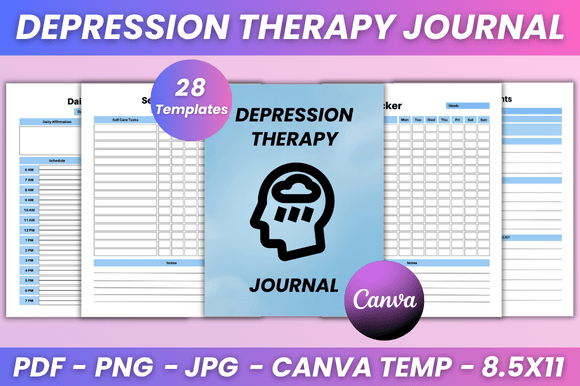
Depression Therapy Journal KDP Interior
Creating a structured journal for depression therapy requires more than just blank pages. It demands carefully designed sections that guide the user through self-reflection, habit tracking, and emotional logging while remaining flexible enough for personal adaptation. For publishers, therapists, and individuals alike, the Depression Therapy Journal KDP Interior provides a complete, editable template system that streamlines the entire process—from design to print. Whether you are publishing on Amazon KDP, building a resource for clients, or crafting your own mental health companion, this interior offers a practical foundation that saves hours of layout work while ensuring professional quality.
What Makes This Journal Interior Different
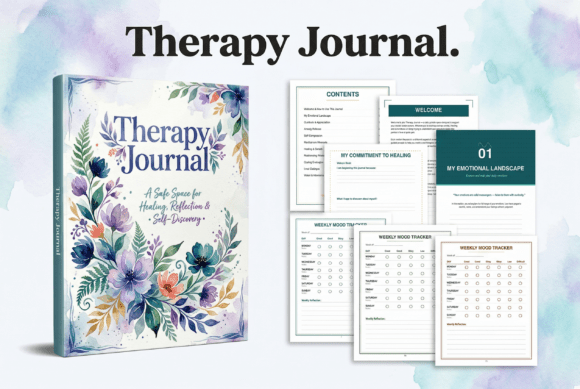
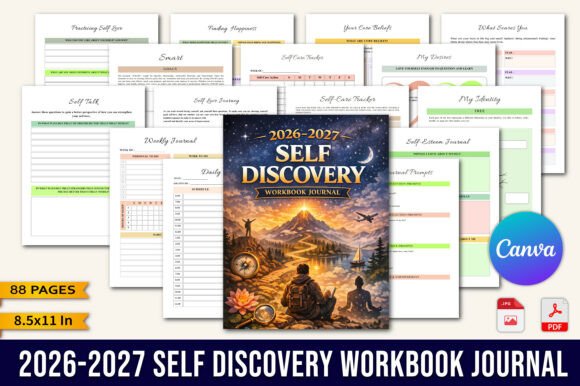
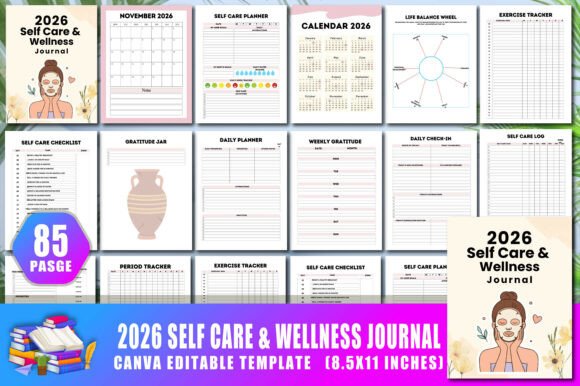
Standard journal templates often force a one-size-fits-all approach. This interior, however, is built around versatility. It includes 28 pages of dedicated trackers, logs, and planning tools—all housed in an 8.5 x 11 inch format with no bleed, ready for both print and digital use. The real strength lies in its editability. Because every element is fully customizable in Canva, you can adjust fonts, colors, layout styles, and even swap in your own photos without touching a single line of code. This means you are not locked into a rigid design; you can tailor the journal to match a specific therapeutic framework, client need, or personal aesthetic.
The interior is not just a collection of pages. It is a system that integrates multiple therapeutic practices into one cohesive workflow. From gratitude journaling and positive affirmations to medication logs and behavior trackers, each component serves a clear purpose. The editable Canva link gives you complete control, so you can reorganize sections, rename headers, or add new prompts as needed. For professionals, this is a time-saving asset that eliminates the need to build a journal from scratch. For individuals, it offers a ready-made structure that can be adapted instantly.
Where the Template Fits in Your Workflow
Understanding when and how to use this interior depends on your role. For a KDP publisher, the journal interior is the core content file you upload to Amazon. The typical workflow begins with downloading the editable Canva link, customizing design elements (colors, fonts, branding), exporting the print-ready PDF, and then uploading it via KDP. Because the interior includes both JPG and PNG files, you also have flexible options for preview images or promotional materials. The template is designed to be a plug-and-play solution that reduces production time while maintaining a clean, minimal aesthetic that appeals to buyers seeking a therapeutic tool.
For therapists, coaches, or mental health practitioners, the journal can be used before, during, and after client sessions. Before sessions, you might print a blank copy to review the structure or adapt prompts for a specific client. During sessions, the Self Care Log, Behavior Tracker, and REFRAME My Thoughts pages can be filled out collaboratively. After sessions, the client takes the journal home to continue tracking moods, habits, and gratitude. This cyclical use reinforces the therapeutic process and gives both practitioner and client a shared framework for progress.
Individuals using the journal for personal growth will find a similar rhythm. You can start by filling out the "Belongs To" page, then explore the Vision Board and Bucket List sections to clarify long-term goals. The Daily Planner and To-Do List help organize immediate tasks, while the Medication Tracker and Sleep Tracker support daily health routines. Over time, the Gratitude Journal and Inspirations pages become a repository of positive reinforcement. The interior is structured to encourage daily check-ins without feeling overwhelming.
Integration with Canva and Other Tools
The interior’s primary interaction is with Canva, a free design platform. The editable link opens directly in your Canva account, where you can modify every text box, adjust colors to match your brand or therapy practice, and rearrange pages. This means you do not need expensive design software or advanced skills. If you already use tools like Adobe Acrobat for PDF merging or Google Drive for client resources, you can export the final PDF and combine it with other documents seamlessly. The no-bleed format ensures your printed journal has crisp edges without content being cut off, which is especially important when using standard home printers or commercial print services.
For publishers, the interior also interacts with KDP’s cover creator. You can design a matching cover in Canva using the same color palette, then upload both the interior PDF and cover file to Amazon. The 28-page count falls within KDP’s low-page-range threshold, which keeps printing costs reasonable. If you want to expand the journal, the editable nature lets you duplicate pages or add new sections—such as additional note pages or extra habit trackers—while maintaining consistent styling. The result is a product that can grow with your audience’s needs.
Practical Implementation Tips
Getting the most out of this interior requires a thoughtful approach to customization. Here are several considerations based on real workflow experience:
- Start with the structure. Before changing fonts or colors, review every page and decide which sections are essential for your use case. For example, a therapist might prioritize the "REFRAME My Thoughts" and "Behavior Tracker" pages, while an individual might focus more on the "Gratitude Journal" and "Positive Affirmations." You can hide or delete pages you do not need directly in Canva.
- Maintain consistency. The interior uses a clean and minimal design, which is ideal for therapeutic contexts because it reduces visual clutter. When editing, stick to a limited color palette (blues, greens, neutrals) and one or two font families. This preserves the professional look that buyers or clients expect.
- Think about pacing. The journal has 28 pages, but that does not mean it must be used linearly. Print multiple copies of high-use pages (like the Daily Planner or Medication Log) so the user can fill them daily without running out. The editable Canva link makes it easy to add extra pages by copying and pasting.
- Test print before full production. If you are publishing on KDP, order a proof copy. Check that all trackers fit within the 8.5 x 11 inch trim and that no text is cut off. Because the PDF is high-quality print ready, you should see sharp text and clean lines. For personal use, test one page on your home printer to confirm margins work with your device.
- Combine with digital workflows. If your clients or readers prefer digital journaling, export the PDF and upload it to a note-taking app like GoodNotes or Notability. The interactive elements (e.g., checkboxes in the Habit Tracker) can be tapped in PDF viewers, making the journal functional on tablets. The JPG and PNG files are useful for sharing individual pages as images in social media or client portals.
Key Features and How to Use Them
Each feature in the interior serves a distinct role in the therapeutic or self-improvement process. Below is a quick overview of the most impactful pages and how they fit into a daily or weekly routine.
- Abundance Tracker (3 pages): Designed to shift focus from scarcity to gratitude. Each page has space to list things you already have. Use this as a morning or evening exercise to counter negative thought patterns.
- Sleep Tracker: Record hours, quality, and interruptions. Pair it with the Medication Tracker to identify correlations between meds and sleep patterns.
- Self Care Log: A simple checklist of self-care activities (exercise, reading, social time). Review weekly to spot gaps in your routine.
- Habit Tracker: Track up to 10 habits over a month. Ideal for building small, consistent actions like drinking water or taking a walk.
- Appointments & Medication Tracker/Log: Separate pages for scheduling and logging. The Medication Log includes time, dosage, and notes—critical for therapy compliance.
- Gratitude Journal & Inspirations: Freeform pages for positive reflections. Use them to collect quotes, memories, or things that brought joy.
- Positive Affirmations: Pre-written or custom affirmations. Repeat aloud or rewrite daily to reinforce self-worth.
- Goal Planner & Behavior Tracker: Connect long-term goals with daily behaviors. Example: goal = reduce anxiety; behavior = practice breathing exercises.
- Daily Planner & To-Do List: Structured layout for scheduling tasks and appointments. Helps reduce overwhelm by breaking down the day.
- REFRAME My Thoughts & Current Situation: Cognitive restructuring tools. Write a negative thought, then reframe it with evidence. Powerful for therapy sessions.
- Activities Tracker: Log what you did each hour. Useful for identifying patterns of avoidance or low energy.
- Vision Board & Bucket List: Creative pages for future aspirations. Cutting and pasting images (or drawing) can be a therapeutic activity in itself.
- Journaling Notes (2 pages): Blank lined pages for free writing. Keep them at the end for unstructured reflections.
- Thank You: A closing page to reinforce gratitude or acknowledge the journaling journey.
Ensuring Long-Term Usability and Quality Control
A journal interior is only valuable if it can withstand repeated use. The high-quality print-ready PDF ensures that even after many print runs, the text remains sharp and the layout stays intact. Because you own the editable Canva link, you can update the design over time—fixing typos, adding new prompts, or refreshing the color scheme. This is especially important if you plan to publish updated editions of the same journal. The lifetime access and instant download mean you never lose the files, and you can re-download them if needed.
For organizations that produce journals for multiple clients or patients, consistency across different editions is crucial. Using the same base template with minor tweaks (different covers, slight wording changes) maintains brand identity while saving design time. The clean, minimal design also makes the journal suitable for a wide demographic—adults aged 20 to 50, including professionals, students, and retirees. The lack of gendered or age-specific imagery ensures broad appeal.
Finally, the interior supports the principle of progressive overload in therapy. You can start with just the core pages (Gratitude, Medication, Sleep) and gradually introduce more complex sections like the Behavior Tracker or Vision Board as the user becomes comfortable. The tracker pages are designed to be non-intimidating, with ample space for handwriting and clear labeling. This reduces friction and increases the likelihood of consistent use.
Practical Workflow Example: From Template to Published Product
To illustrate the full process, consider a publisher creating a "Depression Therapy Journal" for Amazon KDP. The workflow might look like this:
- Access the editable Canva link and duplicate the template into your own account.
- Adjust the color scheme to match your brand—use calming blues or greens. Change the cover font to something inviting.
- Check every page for consistency. You might decide to combine the two "Notes" pages into one longer section, or add a "Week in Review" page by copying an existing tracker.
- Export the file as a print-ready PDF (CMYK, bleed off since interior has no bleed). Also export JPG and PNG files for marketing.
- Upload the PDF to KDP as the manuscript interior. Set trim size to 8.5 x 11 inches. Order a proof copy to verify alignment.
- Once satisfied, publish. The clean, minimal design ensures the journal looks professional in search results and product images.
- Monitor reviews and feedback. If users request more pages for a specific tracker, go back to Canva, duplicate that page a few times, and generate an updated edition.
This workflow eliminates guesswork and reduces production time from days to hours. The template's integration with Canva means even a non-designer can produce a high-quality product that meets Amazon’s formatting requirements.
Adapting the Journal for Personal Use
If you are not publishing but simply want a personal therapy journal, the process is even simpler. Open the Canva link, delete any pages you do not need (e.g., the "Thank You" page if you prefer a more minimal journal), and print at home or at a local print shop. The spiral binding or three-ring binder option works well with the 8.5 x 11 size. You can also keep the journal as an interactive PDF on your tablet, using a stylus to fill in trackers. The flexibility ensures the interior fits your exact routine rather than forcing you into a predetermined format.
For therapists providing journals to clients, you can add your practice logo to the "Belongs To" page and customize affirmation wording to align with your therapeutic approach. The editable files allow you to maintain a professional, personalized resource without violating design licenses—since you own the interior after download, you can legally use it within your practice.
Final Observations on Usability and Value
The Depression Therapy Journal KDP Interior is more than a static set of pages. It is a adaptable tool that bridges the gap between structured therapeutic exercises and freeform creativity. The range of trackers and logs supports both short-term planning (daily planner) and long-term reflection (vision board, gratitude journal). By providing editable files in multiple formats (PDF, JPG, PNG), it accommodates print, digital, and hybrid use cases. Whether you are a busy publisher looking for a new niche, a mental health professional seeking a ready-made client resource, or an individual committed to self-improvement, this interior offers a practical, time-efficient solution. The key is to invest the initial customization wisely, test your output, and then let the journal serve its purpose—helping users navigate depression with structure, consistency, and hope.