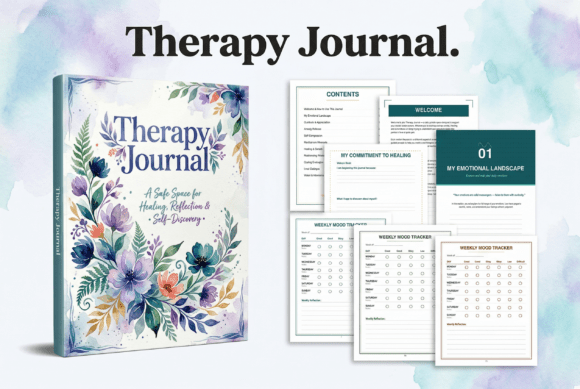
The Therapy Journal: Your Private Space for Emotional Clarity and Growth
You know those evenings when your mind just won't settle? When thoughts loop and twist and the weight of the day sits heavy in your chest. Maybe it's after a difficult conversation with a partner, a tense meeting at work, or simply a day where nothing felt quite right. That's exactly when a Therapy Journal becomes more than paper and ink. It becomes a container for everything you've been carrying around.
What a Therapy Journal Actually Does for You
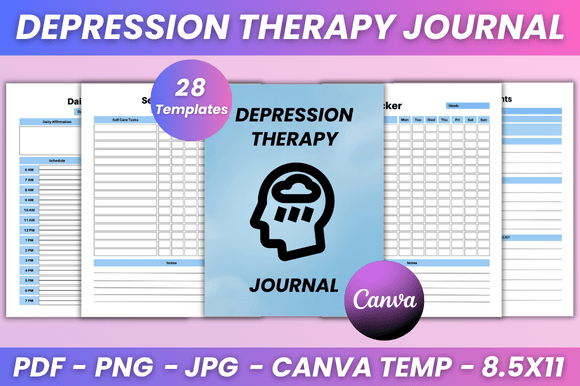
Think of this journal as a structured companion rather than a blank notebook that stares back at you. The 120 pages are arranged into intentional sections that guide you through emotional terrain without leaving you to figure it all out alone. The Emotional Landscape section helps you map what you're actually feeling, which sounds simple but can be surprisingly hard when emotions are tangled together. The Anxiety Release prompts give you a place to untangle those knots on paper instead of keeping them spinning in your head.
One thing that stands out is how the Inner Dialogue section works. Most of us have a voice inside that is far harsher than anything we would ever say to someone we care about. Those 12 pages help you notice that voice and slowly shift it toward something more supportive. It is not about forcing positivity. It is about recognizing patterns and making small adjustments over time.
Real Situations Where This Journal Shows Up
Consider the person who lies awake at 2 AM replaying a mistake they made earlier in the day. The Anxiety Release page becomes the place where that replay can happen on paper instead, which changes the nature of the experience. Writing it down puts distance between you and the thought. You can look at it from the outside rather than being consumed by it.
Or think about someone navigating a major life transition, a career change, the end of a relationship, or moving to a new city. The My Emotional Landscape section gives them a way to check in with themselves regularly. It turns an overwhelming period into something more manageable because they can see how their feelings shift week by week. This is not abstract self-help jargon. This is practical grounding when everything around you feels unstable.
Parents often carry emotional labor that no one sees. The Self-Compassion exercises in Section 2 become especially valuable here. It is easy to pour all your patience and understanding into everyone else and leave nothing for yourself. Those prompts remind you that you deserve the same grace you offer your children or partner. It sounds small, but the cumulative effect of treating yourself with kindness over weeks and months is genuinely transformative.
Professionals in high-stress fields find the Mindfulness Moments pages useful during lunch breaks or between meetings. Instead of doom-scrolling through social media, five minutes with a grounding prompt can reset the nervous system. It is not about escaping work. It is about showing up to the rest of your day with more presence and less tension stored in your shoulders.
Different People, Different Ways of Using It
Someone working through anxiety might start with the Anxiety Release prompt on page 29 and build a habit around it. They might use it three times a week and slowly notice that the physical symptoms of anxiety, the tight chest, the racing heart, become less frequent because they have an outlet that works.
A person focused on personal growth might gravitate toward the Inner Dialogue section and keep returning to it. They might use the prompts to uncover beliefs they did not realize were running in the background, like the idea that they are not good enough or that they must be perfect to be accepted. The journal does not fix these beliefs overnight, but it creates space to examine them with curiosity rather than shame.
Creative professionals, writers, artists, designers, often have rich inner worlds that can feel chaotic. The structured format of this journal helps them organize emotional material in a way that actually supports their creative work rather than draining it. Mapping their emotional landscape gives them clarity that shows up in their art and their relationships.
Then there are people who have tried therapy or counseling and want something to bridge the time between sessions. This journal acts as a continuation of that work. It keeps the insights alive and allows for deeper exploration between appointments. It also makes it easier to show up to therapy with a clearer sense of what is actually going on inside.
What to Consider Before Starting
A journal like this works best when you approach it with consistency rather than intensity. You do not need to fill pages perfectly or write every day. What matters more is showing up when you need it and giving yourself permission to write without editing. Some entries might be messy and raw and full of incomplete sentences. That is exactly right.
One thing to be aware of is that emotional work can bring up material that feels heavy. The journal is designed to support you through that, but if you find yourself struggling, it is always okay to reach out to a professional for additional support. This tool is a companion, not a replacement for therapy when deeper help is needed.
The physical experience matters too. The pages are designed to be written in by hand, which slows you down and engages your brain differently than typing. Some people find this incredibly grounding. Others might need to experiment with the order of sections to find what works for them. Feel free to jump around. The journal is yours to use however serves you best.
The Gratitude prompts near the end of the journal might initially seem simple, but they serve a real purpose. They train your attention to notice what is already going well, which balances the natural tendency to focus on problems. Over time, this shifts your baseline outlook in a subtle but meaningful way. It is not toxic positivity. It is creating a fuller picture of your life that includes both the hard parts and the good parts.
Strengths and Honest Limitations
The strongest aspect of this journal is how it bridges structure and gentleness. It does not hand you a rigid framework that feels clinical. It offers prompts that invite rather than demand. The Emotional Landscape section feels exploratory, not diagnostic. The Mindfulness Moments feel like pauses rather than tasks. That makes it accessible to people who have never journaled before and still valuable for those who have been doing emotional work for years.
The 120-page length is substantial enough to build a real practice around without feeling overwhelming. You can work through it slowly and come back to sections as needed. It holds space for repetition, which is important because emotional patterns are not resolved in a single pass. You might revisit the Inner Dialogue pages multiple times over months and notice different layers each time.
A limitation worth noting is that the prompt format may not suit everyone. Some people prefer completely blank pages where they can free-write without any guidance. If you are someone who resists structure in your personal reflection, the prompts might feel restrictive initially. That said, many users find that the prompts actually open up new avenues of thought they would not have found on their own. It is worth trying with an open mind and adjusting as you go.
Another consideration is that emotional exploration can be uncomfortable before it gets better. The Anxiety Release prompts might bring up feelings before releasing them. The Self-Compassion exercises might feel unfamiliar if you are used to being hard on yourself. This discomfort is part of the process, but it is good to know what you are signing up for. The journal does not promise easy. It promises meaningful.
For people who prefer digital tools, a physical journal requires carrying it with you and finding time to sit with it. That can be a hurdle for some and an advantage for others who want to disconnect from screens. Think about your own habits and what kind of practice is realistic for your lifestyle.
This journal works well for anyone who has ever felt that their emotions are too messy or too big to sort through alone. It gives you a way to start without needing to have everything figured out first. You just need to show up, write something honest, and let the pages hold whatever comes up. That alone is a powerful step toward healing and self-discovery.