The Mom's Family Organizer Planner: A Practical Look at Structure, Flexibility, and Real-Life Fit
Keeping a household running smoothly often feels like coordinating a small organization. Between school schedules, medical appointments, meal planning, and budgeting, the mental load can be heavy. The Mom's Family Organizer Planner enters this space as a dedicated paper tool designed to centralize all that information in one place. But how does it compare to other planning approaches, and what should you consider before choosing it for your home? This article looks at what this planner offers, where it fits best, and where you might need a different solution.
What the Mom's Family Organizer Planner Offers
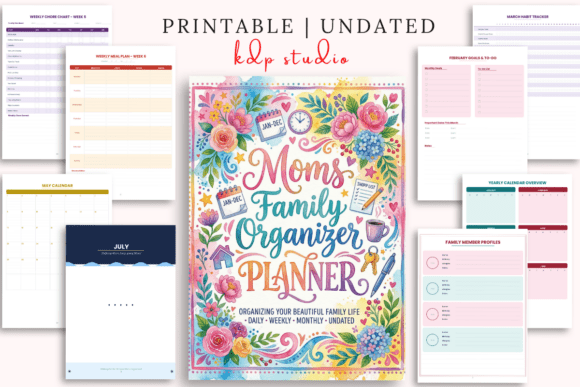
This undated, 120-page planner is built around the idea of a command center for family life. It is divided into sections that address different aspects of household management. The first section focuses on family foundations, with pages for emergency contact information, medical details, and family member profiles that include birthdays, allergies, and notes. There is also a yearly calendar overview for high-level milestone tracking.
The second section moves into logistics with undated monthly layouts spread across 48 pages, allowing you to track appointments and school breaks without being tied to a specific year. Weekly meal planner pages and grocery lists take up 20 pages, aiming to streamline kitchen management and reduce food waste. The planner also includes budgeting pages, holiday planning sections, and spaces for recording family memories. Each of these segments is intended to reduce the scatter of sticky notes, phone reminders, and random papers around the house.
Comparing the Paper Planner Approach with Digital Alternatives
Many families today rely on digital tools such as shared calendar apps, task management software, or note-taking platforms. These offer instant syncing across devices, reminders, and the ability to share with partners and older children. The Mom's Family Organizer Planner takes a fundamentally different approach by being entirely paper-based. This difference matters for several reasons.
Paper planners offer a tactile, uninterrupted experience. There are no notifications, battery concerns, or screen time considerations. For someone who spends much of the day looking at screens, a paper planner can feel like a mental reset. Writing things down by hand also helps with memory retention and gives a clearer overview of the week or month at a glance. However, paper lacks the dynamic updating capabilities of digital tools. If a partner makes a change on their phone, it does not automatically appear in the planner. You need to manually update everything, and the planner is only as current as your last entry.
Digital tools excel at reminders and recurring events. If you need a ping 30 minutes before a dentist appointment, your phone handles that reliably. A paper planner requires you to check it regularly. For families where both parents are deeply involved in scheduling and need real-time updates, a shared digital calendar might reduce friction. For a primary household manager who prefers a single, low-distraction view of the entire month, the paper format can be more effective.
Strengths of the Mom's Family Organizer Planner
The main strength of this planner is its comprehensiveness within a single volume. Instead of using separate tools for meals, budget, medical info, and memories, everything lives between two covers. This all-in-one design reduces the risk of forgetting where you stored something. The undated format is another practical advantage. If you take a month off or start mid-year, you do not waste pages. You simply begin using it whenever you are ready.
The dedicated family member profiles are a standout feature. Storing allergies, medication details, and emergency contacts in one spot is genuinely useful for caregivers, babysitters, or during urgent situations. Similarly, the meal planning and grocery list section encourages a structured approach to weekly cooking, which can lead to less takeout and lower grocery bills over time. For families that thrive on routine and want a centralized spot for all household logistics, this planner provides a ready-made structure that would take significant time to design from scratch.
Another strength lies in its memory-keeping component. Many planners focus purely on tasks and appointments, leaving little room for the meaningful moments. By including spaces for family memories, holidays, and milestones, the planner doubles as a keepsake. Looking back at past entries can become a valuable family ritual, something a digital calendar rarely offers in the same way.
Where Tradeoffs and Limitations Emerge
No single tool fits every family, and the Mom's Family Organizer Planner has tradeoffs worth considering. The most notable is the lack of collaboration features. If you and your partner share scheduling responsibilities equally, a paper planner that stays on the kitchen counter may not be accessible when one of you is at work or running errands. You would need to either send each other updates or duplicate information, which can create inconsistencies.
The undated monthly layouts, while flexible, require you to fill in dates yourself. For some, this is a welcome freedom. For others, it feels like extra busywork. If you prefer a planner that is ready to use the moment you open it, a dated option might be faster. Additionally, the 48 monthly pages cover about a year and a half of monthly planning if used consistently, but if you also use the weekly meal planning pages heavily, those 20 pages may be consumed more quickly, especially if you plan weekly year-round. You may need to supplement with additional meal planning sheets after a few months.
Budgeting is included, but it is not a full ledger system. For families with complex finances—multiple accounts, irregular income, or investments—the budgeting section may feel too simple. It works best as a high-level spending tracker rather than a detailed financial planning tool. If you need robust expense categorization or debt tracking, a dedicated budgeting app or spreadsheet may be a better fit.
Size and portability are also factors. Because the planner covers many sections in 120 pages, it may be thicker than a standard weekly planner. If you need something to carry in a small purse or bag daily, the bulk could be inconvenient. It is better suited as a home-based command center that you consult when planning rather than something you tote everywhere.
Who Benefits Most from This Format
The Mom's Family Organizer Planner is most useful for a primary household manager who values having a single, paper-based system for the majority of family logistics. It suits someone who enjoys handwriting, wants to reduce screen time, and prefers to see their month and week laid out on a physical page. It is especially practical for families with multiple children, where tracking individual profiles, appointments, and meal preferences becomes more complex.
It also works well for those who like structured routines but need flexibility around when they start using a planner. The undated design means you can begin in January, March, or October without wasting space. If you enjoy seasonal planning, holiday prep, and reflecting on family memories, the memory-keeping sections add emotional value beyond pure logistics.
For caregivers who frequently hand off information to babysitters, grandparents, or other helpers, having a single reference document with emergency contacts, allergies, and daily routines is a real time-saver. You do not have to repeat yourself or hope someone remembers a verbal instruction.
When Another Approach May Work Better
If your household relies heavily on shared digital calendars and real-time updates among multiple adults, a paper-only planner may create friction rather than reduce it. In that case, a hybrid system could work well: use the Mom's Family Organizer Planner for meal planning, memory keeping, and home reference, while keeping appointments and events in a shared digital calendar that everyone can access from their phones.
Families with very simple schedules—a single child, few extracurricular activities, and predictable routines—may find the depth of this planner more than they need. A simpler weekly notebook or a basic digital calendar might cover their requirements with less overhead. Similarly, if you have tried paper planners in the past and abandoned them because you forgot to update them, a digital tool with automatic reminders may be more aligned with your habits.
For those whose primary need is detailed financial tracking, a separate budgeting system—whether an app like YNAB or a dedicated budget planner—will offer more depth than the budgeting pages in this planner. The same applies to health tracking: while the family profiles section is excellent for emergency reference, it is not designed for ongoing health logs, medication schedules, or symptom tracking.
Key Decision Factors to Consider
When evaluating whether the Mom's Family Organizer Planner aligns with your needs, think about how you naturally organize information. Do you prefer writing things down or typing them? Do you need to share schedules with others in real time, or do you tend to be the single point of coordination? How much time are you willing to spend each week maintaining the system?
Consider the physical setup of your home. Do you have a dedicated spot—like a kitchen counter, desk, or command center wall—where the planner can live? If it will be tucked away in a drawer, you are less likely to use it consistently. The planner works best when it is visible and accessible.
Also consider the season of life you are in. Parents of very young children may have less time for detailed planning and might need a simpler system. Parents of school-aged children with multiple activities may find the monthly and weekly layouts especially helpful for staying ahead of commitments. If you are in a transitional period, such as moving or changing jobs, the undated format allows you to pick up the planner when your schedule stabilizes.
Making the Planner Work for Your Family
If you decide to try this planner, treat the first month as an experiment. Fill out the family profile pages completely so that section is ready when you need it. Use the monthly layouts to block out known events, and commit to one weekly meal planning session to see if that routine reduces stress. Adjust how you use each section based on what feels useful rather than trying to complete every page.
If you find that you consistently skip the budgeting pages or rarely open the memory-keeping section, that is useful feedback about your actual needs. No planner is used perfectly by everyone, and adapting a tool to your habits is more effective than forcing yourself into a rigid system. You can also combine this planner with other tools—for example, keep the home command center here and use a simple app for grocery lists when you are out shopping.
Final Thoughts on Finding Your Family Planning Fit
The Mom's Family Organizer Planner offers a thoughtful, comprehensive structure for families who want to centralize their logistics and memories in a paper format. Its undated design, family profiles, meal planning focus, and memory-keeping sections distinguish it from simpler planners or purely digital options. It is not a universal solution, and its effectiveness depends on your planning style, household dynamics, and willingness to maintain a physical system.
For the right user—someone who values handwriting, wants a single home base for family information, and enjoys structured yet flexible layouts—this planner can reduce mental load and bring a sense of order to daily life. For those who rely on shared digital tools, need deeper financial or health tracking, or prefer minimal planning overhead, other approaches may serve you better. Understanding your own habits and household needs is the best guide to choosing the tool that will actually support your family's rhythm.