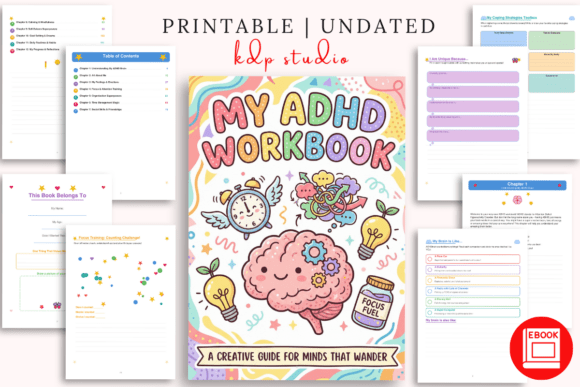
ADHD Workbook for Kids: A Strategic Tool for Building Focus, Confidence, and Emotional Skills
When adults encounter a tool designed for children, the instinct is often to evaluate it purely through the lens of parenting or teaching. But the ADHD Workbook for Kids is more than a set of activities—it is a structured system for helping children understand their own cognitive patterns, develop practical life skills, and gain the kind of self-awareness that can shape long-term success. For entrepreneurs, educators, marketers, and professionals who work with children—or who are raising children while managing demanding careers—this workbook offers a strategic way to address a common challenge: how to help a child with ADHD thrive without constant adult intervention.
The workbook combines neuroscience education, self-reflection, emotional regulation exercises, attention training, organization strategies, time management tools, and social skill development into one cohesive resource. What makes it strategically useful is not just the content, but the systematic way it builds a child’s ability to function independently. For adults who are used to optimizing processes, delegating, and tracking outcomes, the ADHD Workbook for Kids can be treated as a project plan for a child’s personal development—complete with milestones, exercises, and measurable progress.
Understanding What the Workbook Actually Does
At its core, the workbook teaches children that their brain works differently, not deficiently. The section “Understanding My ADHD Brain” frames neurological differences as a set of strengths—sometimes called “ADHD superpowers”—while also giving children the vocabulary to talk about their challenges. This reframing is critical. For adults who manage teams, run businesses, or create content, the principle of turning a perceived weakness into a differentiated strength is familiar. Applying it to a child’s self-concept early can prevent years of shame and confusion.
The “All About Me” pages push children to identify their interests, strengths, and personality traits. This is not fluff. From a decision-making perspective, a child who knows what they care about is far more likely to engage with strategies for focus and organization. The workbook uses that self-knowledge as leverage.
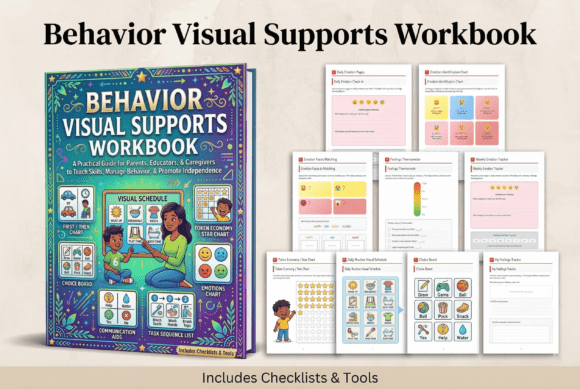
Emotional awareness is addressed through specific activities that help children recognize feelings and practice coping strategies. For a parent or educator trying to reduce meltdowns or conflict, this section is practical. It gives children a toolkit for emotional regulation that can be used in real time. The workbook does not assume a child will simply “calm down”—it provides concrete steps.
Why Thoughtful Adults Should Care About This Tool
If you are an entrepreneur, marketer, or professional with a busy schedule, you likely value systems that produce consistent results with less effort over time. The ADHD Workbook for Kids is exactly that kind of system for a specific challenge: helping a child who struggles with focus, organization, or emotional control become more self-sufficient. When a child learns to manage their own distractions, plan their time, and organize their tasks, the adult spends less time reminding, nagging, or troubleshooting. That time can be redirected toward work, creative projects, or simply recovering from a full day.
Moreover, the workbook builds skills that directly translate to academic and social success. Focus attention training via puzzles and challenges strengthens the same cognitive muscles that help in the classroom. Organization superpowers—checklists and systems—teach children how to break down tasks. Time management magic introduces kid-friendly tools like timers and schedules. For an adult who runs a business, these are essentially the same productivity strategies used in professional settings, adapted for a child’s developmental level.
Strategic Use Cases for Parents and Educators
The book can be used in several ways, depending on the adult’s goals:
- As a weekly structured activity: Set aside 20 minutes three times per week to work through a section. This creates routine and accountability. The child knows what to expect, and the adult can track progress.
- As a response to a specific problem: If a child frequently loses homework or has emotional outbursts after school, jump directly to the relevant section (organization or emotional awareness). This targeted approach works when time is limited.
- As a summer or break project: Use the full workbook over a few weeks to build skills before a new school year. This is analogous to a professional using a training program to upskill before a major project.
- As a communication bridge: Parents can use the workbook to have conversations with teachers or therapists. The shared vocabulary and framework make it easier to coordinate support.
Each of these use cases requires the adult to define a clear goal. Without a goal, the workbook becomes just another activity book. With a goal, it becomes a strategic intervention.
Before You Start: What to Consider
The primary risk of using a tool like the ADHD Workbook for Kids without clarity is that the activities become busywork. A child might complete the pages but not internalize the strategies. For a busy adult, that can feel like wasted time. To avoid this, take a step back before introducing the workbook.
First, identify the specific outcomes you want: Is it fewer forgotten assignments? Better emotional control when transitioning from play to homework? More independence in the morning routine? The workbook is designed to address all these areas, but trying to apply everything at once can overwhelm both the child and the adult. Pick one or two areas to focus on initially.
Second, consider the child’s readiness. Some children are more receptive to workbooks than others. If a child resists, the adult might need to frame it as a game or a special project rather than “homework.” The tone set by the adult matters. The workbook is a tool, not a prescription. How it is introduced—with curiosity, collaboration, or pressure—will heavily influence its effectiveness.
Third, be prepared to adapt. The workbook’s exercises are structured, but every child’s brain is unique. If a particular activity doesn’t land, skip it or modify it. The goal is skill building, not completion. Adults who treat the workbook as a flexible resource rather than a rigid curriculum will get better long-term results.
Potential Pitfalls to Plan For
- Over-reliance on the workbook: The activities are meant to be practiced in real life. A child needs to use the checklists, schedule, and coping strategies outside the pages. The adult’s role is to reinforce and remind.
- Inconsistent use: Like any skill, the strategies in the workbook require repetition. If the workbook is used for a week and then abandoned, the child will not form new habits. Consistency is more important than intensity.
- Expecting immediate results: Behavioral change takes time—weeks or months. Adults managing busy lives may become frustrated if improvements are not instant. Setting realistic expectations upfront prevents discouragement.
- Ignoring the adult’s own role: Children with ADHD often respond better when adults model the same strategies. Using a planner, setting timers, or verbalizing emotional coping in front of the child reinforces what the workbook teaches. The tool works best when it is part of a family or classroom culture, not an isolated activity.
Long-Term Value: Beyond the Workbook
The real value of the ADHD Workbook for Kids is not in the pages themselves but in the foundation they build. When a child learns to recognize their own emotional state, use a checklist to organize a task, or break a big assignment into smaller steps, they are acquiring life skills that will serve them through adolescence and into adulthood. For the adult who invests time in this process, the payoff is a child who gradually needs less external structure because they have internalized their own.
From a strategic standpoint, this is an investment in future capacity. A child who can manage their own ADHD symptoms is less likely to require expensive tutoring, therapy, or special accommodations later. That is not to say the workbook replaces professional support—it does not—but it can reduce the daily friction that wears down parents and educators.
Additionally, the workbook offers a common language. When a child says, “My brain is in tunnel mode,” or “I need to use my calm-down strategy,” the adult immediately understands what is happening. That shared vocabulary speeds up communication and reduces conflict. For a busy professional raising a child, any reduction in daily friction is a meaningful win.
Integrating the Workbook into Existing Routines
The most successful use of the ADHD Workbook for Kids happens when it is woven into existing family or classroom routines rather than added as an extra task. For example:
- Morning check-in: Use the emotional awareness pages to start the day. The child identifies how they feel and chooses a strategy if needed.
- Homework time: Refer to the organization and time management sections. The child uses a checklist from the workbook to plan which subjects to do first.
- Weekend reflection: Spend a few minutes on the “All About Me” or social skills pages, discussing what went well and what could improve.
- Evening wind-down: Use the focus exercises as a calming activity before bed instead of screens.
By embedding the workbook into existing moments, the adult avoids creating another chore. The child gradually internalizes the strategies until they become second nature.
Decision-Making Guidance for Choosing This Tool
Not every child with ADHD will respond to a workbook format. Some are more kinesthetic or prefer digital tools. But for children who enjoy structured activities, puzzles, and reflection, the ADHD Workbook for Kids is an excellent fit. Adults should evaluate based on the child’s learning style and current needs. If the child has never had a resource that explains ADHD in a positive and empowering way, this workbook fills that gap.
It is also worth considering the timing. If a child is in the middle of a crisis—such as severe school refusal or a major emotional breakdown—a workbook might not be the first tool to reach for. In crisis, professional support is more appropriate. But for everyday skill-building and proactive growth, the workbook shines.
For educators, the workbook can be used as a supplemental resource in a classroom with multiple students. It is not a curriculum, but it provides small-group or individual activities that reinforce executive function skills. Given that teachers often have limited time to address individual needs, having a resource that a student can work through independently with periodic check-ins is practical.
Practical Example: A Parent’s Weekly Plan
Imagine a parent of a third-grader with ADHD. The child struggles to complete homework without constant redirection and often loses track of assignments. The parent decides to use the workbook over six weeks:
- Week 1: Complete the “Understanding My ADHD Brain” and “All About Me” sections. Goal: Shift the child’s mindset from “I’m bad at focusing” to “My brain works in a cool way.”
- Week 2: Work through the “Emotional Awareness” activities. Goal: Give the child words for frustration and teach a simple breathing exercise.
- Week 3: Introduce the “Organization Superpowers” section. Create a checklist for the after-school routine and tape it to the wall.
- Week 4: Use the “Time Management Magic” exercises. Start using a timer for each homework subject. The child begins to estimate how long tasks take.
- Week 5: Focus on “Attention Training” puzzles. Practice focusing for short bursts. The parent notices less resistance during homework.
- Week 6: Revisit all sections, celebrating progress. The child creates their own modified checklist based on the workbook’s templates.
By the end of the six weeks, the child has a personalized system. The parent has spent about three hours total guiding the process, but they have gained back far more time in reduced nagging and smoother routines.
Final Strategic Observations
The ADHD Workbook for Kids is not a magic cure, but it is a well-designed tool for a specific purpose. For adults who understand the value of scaffolding—building temporary structures that support growth until the child can stand alone—this workbook fits naturally into a broader strategy. It teaches transferable skills, builds self-awareness, and reduces the emotional load on both the child and the adult.
When used with clear goals, consistent practice, and realistic expectations, it can change how a child navigates their daily life. For the entrepreneur who needs to focus on building a business, the teacher who has twenty other students, or the parent who is worn out by constant reminders, investing in this workbook is a decision that pays compound interest. The skills a child learns now will keep paying off for years to come.