Calm Breathing Workbook for Kids
When stress arrives unexpectedly, having a simple, repeatable method to reset the mind is invaluable. For children and adults alike, the Calm Breathing Workbook for Kids provides exactly that: a structured approach to breath awareness that fits into daily life, therapy sessions, classroom routines, or moments of quiet reflection. This workbook is not just a collection of exercises; it is a practical tool designed to build emotional regulation, focus, and calm through deliberate, easy-to-follow breathing techniques.
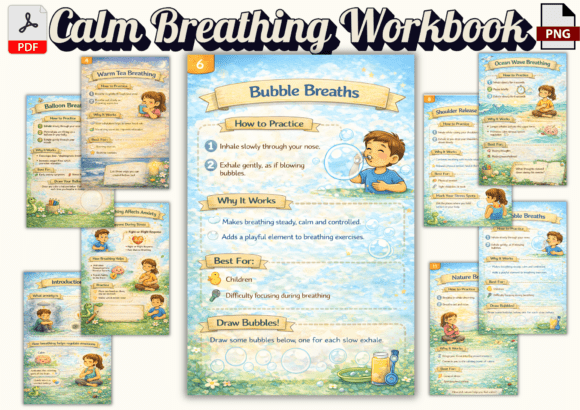
The workbook contains 17 beautifully illustrated pages, including exercises such as Butterfly Grounding Breath, Ocean Wave Breathing, Balloon Breathing, Bubble Breaths, Candle Breathing, Humming Breath, Square Breathing, Nature Breathing, and Counting Breaths. Each page includes clear instructions, calming illustrations, and reflection prompts that encourage mindfulness practice in a supportive, engaging way. The printable 6x9 inch format, along with individual PNG files for each page, makes it easy to use in various settings, whether printed for a calm-down corner, displayed on a tablet, or shared digitally with students or clients.
Where This Workbook Fits Into Your Daily Workflow
For parents, teachers, counselors, and therapists, the Calm Breathing Workbook for Kids functions as a reproducible resource that can be integrated before, during, or after any activity that requires focus, emotional regulation, or a moment of pause. It is not a one-time solution but a reusable framework that becomes part of a broader emotional wellness toolkit.
Consider how you might use it in your routine:
- Before a challenging task: Use a short breathing exercise like Square Breathing or Counting Breaths to center attention before a test, a difficult conversation, a creative project, or a decision-making moment. This primes the nervous system for calm focus rather than reactive stress.
- During transitions: When moving from one activity to another, especially for children or adults who struggle with change, a quick breathing break using Balloon Breathing or Bubble Breaths can create a smooth, calming bridge between tasks.
- After a stressful event: Following an upsetting moment—whether a conflict, an overwhelming workload, or a sensory overload—the workbook offers immediate, structured relief. Ocean Wave Breathing or Nature Breathing are especially effective for gradual de-escalation.
- As part of a daily mindfulness habit: Incorporate one exercise each morning or evening as a ritual. Over time, this builds emotional resilience and self-awareness, making it easier to access calm when it is most needed.
Practical Implementation for Different Settings
The Calm Breathing Workbook for Kids is designed to be flexible, and its integration into your workflow depends on the environment and audience. Here is how it can be applied across common contexts:
In the Classroom or Homeschool Environment
Teachers and homeschoolers can print the workbook pages and use them during morning meetings, after recess, or before tests. The high-resolution PDF and individual PNG files allow for easy projection on a smartboard or inclusion in digital lesson plans. Butterfly Grounding Breath works well as a whole-group activity: children extend their arms like butterfly wings and slowly bring them together as they breathe, creating a visual and physical anchor for the breath. The reflection prompts at the end of each exercise encourage journaling or group discussion, reinforcing emotional vocabulary and self-awareness.
A practical setup might include a calming corner where the workbook pages are displayed or available in a binder. When a student feels overwhelmed, they can choose a breathing exercise independently, fostering self-regulation without requiring teacher intervention. This consistency builds a classroom culture where emotional tools are normalized and accessible.
In Therapy or Counseling Sessions
Therapists and counselors will find that the Calm Breathing Workbook for Kids complements evidence-based approaches like cognitive-behavioral therapy, dialectical behavior therapy, and somatic experiencing. The exercises are simple enough for young clients yet substantive enough to support adult clients exploring breath awareness as a grounding technique. Use Candle Breathing to introduce the concept of focused attention, or Humming Breath to activate the vagus nerve and promote relaxation.
Because each page includes reflection prompts, the workbook doubles as a therapeutic journal. Clients can complete exercises between sessions, building a personal practice that reinforces skills learned in therapy. The printable format means you can select specific pages for specific goals, creating a customized resource for each individual.
For Parents and Caregivers at Home
Parents can integrate the workbook into bedtime routines, homework breaks, or moments of sibling conflict. The soothing illustrations and kid-friendly language make the exercises inviting rather than instructional. Bubble Breaths, for example, is a playful way to teach slow exhalation: imagine blowing a bubble that must not pop, so the breath must be gentle and long. This approach turns a coping skill into a game, increasing buy-in and repeated practice.
For parents who work from home or manage multiple responsibilities, the workbook provides a quick, no-prep activity that can be done in two to five minutes. Keep a printed copy in the kitchen, living room, or car for easy access. The individual PNG files also allow you to load exercises onto a tablet or phone for use on the go.
For Mindfulness Practitioners and Coaches
If you lead mindfulness groups, workshops, or one-on-one coaching sessions, this workbook can serve as a handout or takeaway resource. The Ocean Wave Breathing and Nature Breathing exercises align well with nature-based mindfulness practices, while Square Breathing is a classic technique often used in stress reduction programs. Having a consistent, visually appealing format helps participants remember and practice the techniques between sessions.
Consider using the workbook as part of a broader curriculum on emotional intelligence. The reflection prompts encourage participants to notice how their body feels before and after each exercise, building interoceptive awareness—a key component of emotional regulation.
Integration With Other Tools and Resources
The Calm Breathing Workbook for Kids works best when combined with other approaches to emotional wellness. Here are several ways to pair it with complementary resources:
- Visual timers or apps: Use a timer to indicate the duration of each breathing exercise, especially for children who benefit from clear boundaries. Many mindfulness apps include visual cues, such as expanding and contracting circles, that mirror the breath patterns in the workbook.
- Sensory tools: Pair breathing exercises with a weighted blanket, a fidget toy, or a calming aroma like lavender. For example, Nature Breathing can be enhanced with a nature sounds playlist or a view of plants or water.
- Journaling or drawing: After completing a breathing exercise, encourage reflection through expressive activities. The workbook already includes reflection prompts, but extending the process with a blank page for drawing the breath or writing about feelings deepens the learning.
- Movement and yoga: Combine breathwork with gentle stretches or yoga poses. Butterfly Grounding Breath naturally pairs with seated forward folds or butterfly pose, while Balloon Breathing can be done lying down with hands on the belly.
- Checklists and habit trackers: For consistent use, create a simple checklist that tracks which exercises were practiced each day. This supports long-term habit formation and gives users a sense of accomplishment.
Usability, Preparation, and Quality Control
One of the workbook’s strengths is its low barrier to entry. No special equipment, training, or preparation is required. The PDF and PNG files are high-resolution and print cleanly on standard paper or cardstock. For durability, laminate the pages or place them in page protectors within a binder. This allows repeated use, especially in classroom or therapy settings where multiple children or clients will use the same resource.
When preparing the workbook for use, consider organizing the pages by difficulty or context. The exercises range from highly accessible (Balloon Breathing, Bubble Breaths) to more structured (Square Breathing, Counting Breaths). Grouping them by purpose—such as energy, grounding, focus, or relaxation—makes it easier to choose the right exercise for the moment.
For digital workflows, the PNG files are ideal for inclusion in slide decks, digital whiteboards, or tele-health platforms. Counselors and therapists can share a screen and guide clients through the exercises in real time, even in remote sessions. The visual simplicity of the illustrations translates well to digital formats without losing clarity.
Building Consistency and Long-Term Use
The real value of the Calm Breathing Workbook for Kids emerges with repeated use. Like any skill, breath awareness becomes more accessible with practice. Encourage users to select one or two exercises to practice daily for a week before adding new ones. This gradual approach builds neural pathways that make calm responses automatic over time.
For adults using the workbook alongside children, modeling the exercises is essential. When children see a parent or teacher taking a deep Humming Breath or sitting quietly with Ocean Wave Breathing, they internalize the behavior as normal and desirable. This shared practice can strengthen relationships and create a household or classroom culture centered on emotional safety.
Long-term, the workbook can be used cyclically. Revisit exercises after a few months to see how the experience has changed. An exercise that felt difficult at first may become a favorite anchor. The reflection prompts also provide a record of emotional growth, making it easy to track progress over time.
Final Observations on Implementation
The Calm Breathing Workbook for Kids is not a quick fix but a foundational tool for emotional regulation. Its strength lies in its simplicity, accessibility, and repeatability. Whether you are a parent seeking calmer mornings, a teacher managing a lively classroom, or a therapist supporting clients in distress, the workbook offers a structured yet flexible path to greater calm and focus.
When integrating this resource into your workflow, remember that consistency matters more than perfection. A two-minute breathing exercise done daily is far more effective than a thirty-minute session done sporadically. Start small, choose one exercise that resonates, and build from there. The Calm Breathing Workbook for Kids gives you everything you need to begin—the rest is simply a matter of breath and intention.
By embedding these practices into your existing routines, you transform a workbook into a living practice. That is the difference between owning a tool and using it well. The exercises become second nature, available at any moment, in any setting, for anyone who needs them.