Delivery Logbook Fleet Route Tracker: Build a Professional KDP Interior Bundle
If you sell on Amazon KDP, you already know that the difference between a decent notebook and a bestseller often comes down to the interior. A clean, usable layout that solves a real problem for your customer can make your book stand out in a crowded search results page. The Delivery Logbook Fleet Route Tracker bundle gives you exactly that—a practical, professional set of templates designed for fleet managers, delivery drivers, and small business owners who need to log routes, fuel, mileage, and driver operations without fuss.
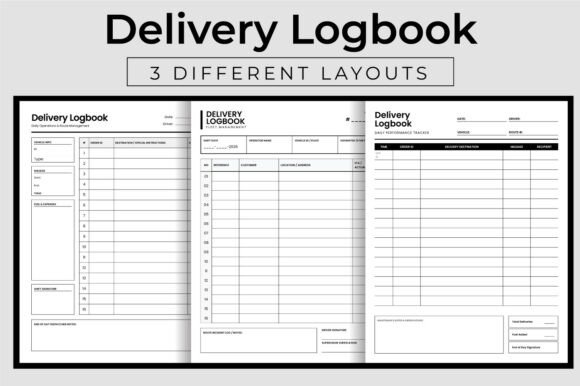
This bundle includes three distinct layouts, each crafted for a specific use case, and comes as three PDF files ready to upload to KDP. Each file is 120 pages long (though you can adjust the page count), printed at 300 dpi with high resolution, and sized at a standard 8.5" x 11" with no bleed. You get JPG previews alongside the print-ready PDFs, and the whole package is fully customizable. Whether you are an experienced KDP publisher or just starting your first low-content book, this set gives you a solid foundation.
What Makes This Bundle Different
The three layouts in this bundle are not just random grids. Each one targets a distinct operational need. The first layout focuses on daily route logging—think start and end times, stops made, delays encountered, and signature lines for proof of delivery. The second layout is built for driver operations tracking: hours worked, vehicle condition checks, incidents, and task completion. The third layout combines mileage and fuel recording with a simple expense tracker, ideal for independent contractors who need to report deductions at tax time.
Visually, these templates lean toward a clean, utilitarian style. The line weights are crisp but not heavy, the column spacing is generous enough to write in by hand, and the headers are bold without being distracting. There is no decorative clutter. The personality here is professional and no-nonsense—exactly what a fleet manager or delivery driver wants when they are filling out logs at the end of a long shift. The typography used in the headers and labels is a modern sans serif, which keeps the page looking current and easy to read at a glance. This is not a font-heavy design; the emphasis is on clarity and quick scanning.
For a KDP publisher, this means you can sell to a very specific, motivated audience. Fleet managers, logistics coordinators, owner-operators, and even freelance delivery drivers using apps like DoorDash or Uber Freight need these logs for compliance, tax purposes, and operational oversight. The bundle gives you three products in one upload, which increases the perceived value and reduces the likelihood of returns.
Where This Layout Works Best
Because the design is utilitarian and professional, the Delivery Logbook Fleet Route Tracker is best suited for business and commercial use. This is not a journal for creative writing or a daily planner for personal reflection. It is a tool for people who need to track operations, comply with regulations, and organize data quickly. The layout works perfectly for:
- Owner-operators and small fleet managers who need to document daily routes and fuel expenses.
- Delivery service providers who must maintain logs for DOT or company compliance.
- Freelance drivers who want to separate business mileage from personal use for tax deductions.
- Logistics coordinators training new drivers on proper documentation procedures.
- KDP publishers looking to expand into the business and productivity niche with a professional offering.
The 8.5" x 11" format is standard for US letter-size binders and clipboards, which is exactly what most drivers use. The no-bleed specification means you can upload directly to KDP without reformatting margins or worrying about trim errors. The 300 dpi resolution ensures that every line and label prints sharp, even if the buyer uses a laser printer at home. From a design assets perspective, this bundle saves you the weeks of layout testing and grid construction that goes into a polished interior. You are essentially buying a production-ready skeleton that you can customize with your own branding, cover design, and introductory pages.
How Layout Affects Usability and Brand Perception
When a buyer opens a logbook and finds cramped columns, unclear labels, or inconsistent spacing, they stop trusting the product. They wonder if the publisher actually tested it. The Delivery Logbook Fleet Route Tracker avoids this entirely by prioritizing readability and visual hierarchy. The most important fields—date, route number, odometer start and end—are placed at the top of each page, where the eye naturally lands. Supporting details like customer names, delivery notes, and conditions are grouped below in clearly bordered sections.
This structure does two things. First, it reduces the cognitive load on the user. They do not need to hunt for where to write; the layout guides them from top to bottom, left to right. Second, it communicates that the publisher understands the user's workflow. When a driver fills out these logs, they are often doing it in a cab, after dark, or between stops. The layout must be forgiving of less-than-perfect handwriting and low light. The generous line height and moderate column width in these templates accommodate that reality.
From a brand identity perspective, a clean, professional interior signals that you care about the user experience. Buyers who purchase one of your logbooks and find it easy to use are far more likely to buy your other books, leave positive reviews, and recommend you to colleagues. Consistency across your product line—same header style, same grid structure, same label placement—builds recognition. Over time, a buyer might search specifically for your brand because they know exactly what the interior will look like. This is how small KDP publishers build a loyal audience in a niche like fleet management.
Practical Guidance for Choosing and Using This Bundle
Before you upload these files to KDP, take a few minutes to evaluate how they fit with your existing product line. If you already sell trip planners or mileage logs, the Delivery Logbook Fleet Route Tracker is a natural extension. If you are entering the logistics niche for the first time, consider ordering a physical proof copy and testing the layout with a pen. Write in it, fold the pages, see if the paper weight and line spacing feel right for daily use. A small investment in a proof copy can save you from dozens of negative reviews about cramped spacing or awkward margins.
When you customize the bundle, focus on the cover first. The interior is strong, but the cover is what gets the click. Use a professional serif or sans serif font for the title, keep the background clean, and add a subtle visual cue like a map icon or steering wheel silhouette. Avoid cluttered or overly artistic covers—your buyer is a professional looking for a tool, not a decorative gift. Pair the cover font with the clean sans serif used in the interior headers for a cohesive brand identity. If you include a call-to-action or a summary page at the beginning, keep the typography consistent. Mixing too many font families in a low-content book can make it feel disjointed.
One of the overlooked strengths of this bundle is that it includes three layouts. This gives you flexibility. You can publish each layout as a separate book (120 pages each) or combine them into a single larger volume. If you combine them, consider adding dividers or tab pages so the user can quickly find the section they need. The customizable nature of the PDF files means you can add your own letter-sized divider pages, change header colors, or insert your logo on every page. Just be careful not to overcrowd the layout—functionality should always come first.
Readability Considerations and Commercial Use
Readability in a logbook is not about beautiful typography. It is about quick scanning and accurate data entry. The fonts used in the labels and headers are a clean sans serif with moderate stroke width, which works well for small sizes. The body areas are left intentionally blank so the user's own handwriting becomes the content. This is a smart design choice because it does not compete with the user's writing. If you add your own text, keep it in the same sans serif family and use a weight between regular and bold for the headers. Avoid light or thin weights—they disappear when printed on standard office paper.
All three layouts are formatted for US letter size with no bleed, which means they meet KDP's standard requirements without any extra trimming. The 300 dpi resolution ensures that even fine lines around labels and signature areas remain crisp. If you decide to increase the page count beyond 120 pages, do a test print first. Thicker books can have trouble with spine cracking or pages pulling away from the glue if the interior margins are too narrow. The no-bleed specification gives you a safe buffer, but check your margins if you add extra content or divider pages.
Commercial licensing for a KDP bundle like this is straightforward. You are purchasing the right to upload the PDF files to Amazon and sell printed copies. You can customize the files for multiple book variations, but you cannot resell the raw PDF templates themselves as a digital product. If you plan to expand into other sales channels—Etsy, Gumroad, or your own website—check the specific license terms. Most bundles of this type allow commercial print use but restrict digital redistribution.
Final Observations and Recommendations
The Delivery Logbook Fleet Route Tracker bundle is a solid choice for any KDP publisher targeting the logistics, delivery, or small business niche. It is practical, professional, and built with the end user's workflow in mind. The three layouts give you enough variety to appeal to different types of drivers and fleet managers without overwhelming you with formatting work. If you are looking for a reliable interior that prints cleanly, supports easy customization, and fills a real market need, this bundle is worth adding to your product lineup.
My advice: start with the daily route log layout for your first book. It is the most universally needed format and will give you the fastest feedback from buyers. Once you have a few sales and reviews, publish the driver operations tracker and the mileage fuel record as separate titles. Over time, you can create a full suite of logistics logbooks under your brand, each one building on the trust and recognition you have established with your audience. Keep the design consistent, listen to customer feedback, and resist the urge to over-customize the interior. Sometimes a simple, well-built layout is all your customer needs.