The 2026–2027 Entrepreneur's Success Workbook: Evaluating All-in-One Planning for Strategic Growth
Choosing the right planning system can feel like one more decision you do not have time for. Between tracking daily tasks, mapping out quarterly objectives, and keeping tabs on competitors, many entrepreneurs end up juggling multiple tools that never quite connect. The 2026–2027 Entrepreneur's Success Workbook positions itself as a single resource that combines scheduling, business frameworks, and operational trackers into one package. But is consolidating everything into one workbook the right approach for your stage of business? Understanding what this tool offers—and where it may fall short—can help you decide whether it fits your workflow or whether a different system would serve you better.
What the 2026–2027 Entrepreneur's Success Workbook Actually Includes
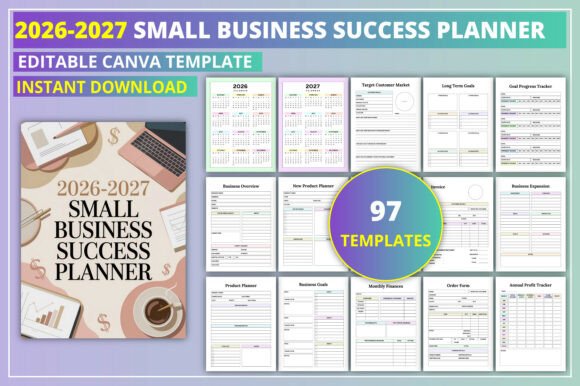
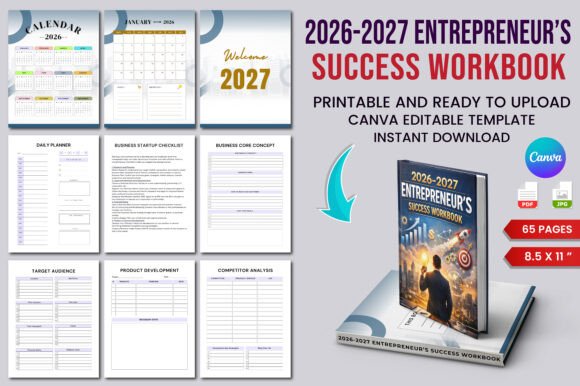
At its core, the workbook is a downloadable and editable set of 65 templates designed to cover both high-level strategy and day-to-day operations. It provides yearly and monthly calendars for 2026 and 2027, a daily planner, and a business startup checklist. Beyond scheduling, it includes structured pages for quarterly goal setting, a SWOT analysis template, and sections dedicated to defining your core business concept, target audience, and market analysis. For those managing active products, there are pages for product development, competitor analysis, and group projects. On the operations side, the workbook tracks social media activity, shipping, orders, returns, and advertising performance. It also includes a contact list, to-do lists, notes pages, and thank-you files.
Each template is offered in two formats: a high-quality ready-to-upload PDF and an editable Canva link. The pages are sized at 8.5 by 11 inches, which means they print cleanly on standard paper or can be used digitally on a tablet or laptop with annotation apps. This dual-format approach is one of the workbook’s more practical features, as it lets you choose between physical and digital use depending on your preference or situation.
What Makes This Workbook Distinct from Other Planning Approaches
Many business planners on the market focus primarily on time management or goal setting, but few consolidate operational trackers—like shipping logs, return records, and ad performance sheets—alongside strategic frameworks. The inclusion of trackers for orders, returns, and ads makes the 2026–2027 Entrepreneur's Success Workbook more relevant for product-based businesses, e-commerce entrepreneurs, or anyone managing inventory and fulfillment. A service-based consultant or freelance creative might not need those specific pages, but for someone selling physical goods, having all that data in one place can reduce the friction of jumping between spreadsheets and apps.
Another distinguishing factor is the editable Canva link. Instead of receiving a static PDF that cannot be modified, you can adjust headings, change colors, or add your logo directly in Canva. This allows you to tailor the workbook to your branding and preferred terminology without needing graphic design skills. Many competitor planners offer PDF-only formats or require you to print and handwrite everything, which works well for some but feels restrictive for others who prefer digital customization.
The workbook also covers a full two-year span. While many annual planners become outdated halfway through the year, having calendars and goal pages for both 2026 and 2027 allows you to look ahead without purchasing a separate tool next year. That said, a two-year commitment also means that if your business model shifts significantly in 2026, you may need to supplement certain sections rather than replace the entire system.
Strengths You Can Expect from Using the Workbook
Comprehensive coverage for product-focused entrepreneurs. If you run an e-commerce store, a small manufacturing operation, or a brand that ships products, having dedicated trackers for shipping, orders, returns, and ads can save you from creating your own systems from scratch. Instead of building a spreadsheet for each function, you can fill out the pre-made pages and keep everything in one binder or notebook.
Strategic planning frameworks built in. Many entrepreneurs understand the value of a SWOT analysis or a competitor analysis but never get around to doing one because they lack a template. The workbook lowers the barrier by providing structured pages with prompts and categories. For a new business owner who is still learning how to evaluate their market, these templates serve as a guided exercise rather than a blank sheet of paper.
Dual digital and print functionality. Not every planner offers the flexibility of both a printable PDF and a fully editable digital version. This is a genuine strength if you sometimes work on paper and sometimes work on a tablet or laptop. You can start by printing the startup checklist and filling it out by hand, then switch to editing the social media tracker in Canva when you need to share it with a team member.
Two-year scope reduces annual repurchasing. If you prefer a long-term view, the inclusion of 2026 and 2027 means you can set yearly goals and track progress across multiple quarters without switching systems. For entrepreneurs who operate on longer product cycles or seasonal calendars, this extended timeline can be more practical than a single-year planner.
Tradeoffs and Limitations to Consider
The workbook is template-based, not an app. Unlike software tools that sync data, send reminders, or automate calculations, the workbook is a collection of documents that require manual entry. If you rely on real-time updates or collaborative features across a team, you will still need a digital system for shared tasks. The workbook works best as a personal reference or a printed companion, not as a live project management tool.
Not all sections will apply to every business. A solo service provider—such as a coach, writer, or consultant—may find little use for the shipping tracker, order tracker, or return tracker. Similarly, someone who does not run paid ads will skip the ads tracker pages. While you can simply ignore unused sections, you are essentially paying for templates you do not need. If you are very focused on time management and goal setting only, a simpler planner might cost less and feel more streamlined.
The depth of each template is broad but not deep. The workbook covers many areas at a high level, which is useful for getting started or maintaining an overview. However, if you need a very detailed competitor analysis with multiple comparison matrices or a complex product development roadmap with Gantt charts, the provided templates may feel basic. In those cases, you might supplement the workbook with specialized tools or create your own expanded versions.
Canva editing requires internet access and a free account. If you prefer to work offline or do not want to sign up for another platform, the PDF-only version is still available, but you lose the customization option. The editable Canva link is a nice feature, but it does depend on having a reliable connection and at least a basic familiarity with Canva’s interface. For someone who is not comfortable with design software, the learning curve might outweigh the benefit.
When the 2026–2027 Entrepreneur's Success Workbook Is a Strong Fit
This workbook is most valuable for entrepreneurs who are in the early to middle stages of building a product-based business and who want a centralized place to plan, track, and review their work. If you are launching a new brand in 2026 and expect to manage inventory, fulfill orders, and run marketing campaigns, having one set of templates to coordinate these activities can reduce the chaos of starting from zero. The startup checklist alone can serve as a useful reference for steps you might overlook, such as registering trademarks or setting up shipping profiles.
It is also a good match for someone who values structured thinking but does not want to create their own planning frameworks. If you know you need to analyze your market and define your target audience but do not know where to start, the guided templates offer a clear path forward. Similarly, if you prefer a hybrid work style—sometimes on paper, sometimes digital—the dual-format availability lets you switch as needed.
An entrepreneur who already uses a digital productivity suite and is happy with it probably does not need a separate workbook. But if you find yourself feeling scattered, using sticky notes and random documents, the workbook can act as a single source of truth for both strategy and operations. It is not a replacement for good habits, but it can help you organize those habits into a repeatable system.
When You Might Want Another Option
If your business is entirely service-based and you do not track physical products, shipping, or returns, the operational trackers in the workbook will likely go unused. In that case, a simpler planner focused on time blocking, client management, and revenue tracking might be more efficient. Similarly, if you operate a larger team and need collaborative project management software, a template-based workbook will not replace tools like Asana, Trello, or Notion for assigning tasks and tracking dependencies.
For entrepreneurs who prefer a minimal approach and do not want to print or maintain a physical binder, a digital-only planning system might be more appealing. The workbook is designed to be printed or used on a tablet, but it is not a native app. If you do all your planning on your phone or in a single note-taking app, the PDF format could feel bulky.
Also, if you are very experienced in business planning and already have your own templates and processes, the workbook may feel redundant. Its strength is providing structure for those who need it, not innovating new methodologies. For someone who already runs deep competitor analyses and has a refined goal-setting system, the templates may be too basic to add value.
Practical Factors to Weigh Before Choosing
Consider how you prefer to work day-to-day. Do you like writing things down by hand and flipping through physical pages? The PDF print option works well for that. Do you prefer to type your notes and keep everything searchable? The editable Canva version or PDF annotation on a tablet will suit you better. The workbook accommodates both, but you will have to decide which mode you use most often.
Think about the next two years of your business. If you expect significant changes—such as expanding from a solo operation to a small team, or shifting from services to products—the workbook includes enough flexibility to grow with you. However, if you are unsure whether you will still need shipping and order trackers in 2027, you might prefer a one-year tool that gives you less unused content.
Also consider your budget for planning tools. The workbook is priced as a complete set of 65 templates, which can be more cost-effective than buying separate planners for strategy, daily planning, and operations. But if you only need two or three of those functions, a more targeted purchase might save money and reduce clutter.
How to Make the Most of the Workbook If You Choose It
If you decide the 2026–2027 Entrepreneur's Success Workbook aligns with your needs, approach it as a flexible system rather than a rigid schedule. Fill out the startup checklist early to identify gaps in your business foundation. Use the quarterly goals pages to set three to five priorities each quarter, and review the SWOT analysis at the beginning of each year to stay aware of changing market conditions. The daily planner pages are designed for straightforward task management, but you can also use them for weekly reviews if daily entries feel too granular.
The social media and ads trackers are most useful when updated regularly—ideally weekly—so that you can spot trends before they become problems. If you manage returns or shipping, logging each one right away will make the tracker a reliable reference for customer service or financial planning. And because the Canva link is editable, you can adjust the design as your brand evolves, which keeps the workbook feeling current even in the second year.
Making Your Decision with Clarity
No single workbook solves every business challenge. The 2026–2027 Entrepreneur's Success Workbook offers a wide range of templates that can help you stay organized, set strategic goals, and track operational details—especially if you run a product-based business. Its dual-format flexibility and two-year scope add practical value, but its template-based nature means it will not replace digital collaboration tools or deep-dive planning software. By considering how you work, what you sell, and where you need the most structure, you can determine whether this workbook supports your journey or whether a more focused alternative fits your style better. The best choice is the one you will actually use consistently, and this workbook gives you ample reason to try.