The Home Cooking Recipe Journal: A Practical Tool for Organized Culinary Growth
For many adults balancing careers, creative projects, and daily responsibilities, cooking can oscillate between a rushed chore and a deeply satisfying creative outlet. The gap between these two experiences often comes down to organization and reflection. The Home Cooking Recipe Journal is a workbook designed to bridge that gap. It is not simply a blank notebook for scribbling ingredients; it is a structured system for capturing what works, understanding why it works, and building a repeatable, personal cooking practice over time.
Whether you are a food blogger developing content, a freelancer managing meal prep alongside project deadlines, or a small business owner looking for a productive way to unwind, this journal offers a framework that integrates directly into your existing workflow. Its infographic layout and guided prompts reduce the friction of documentation, turning a potentially tedious task into a quick, visually rewarding habit.
Understanding the Journal as a Process Tool
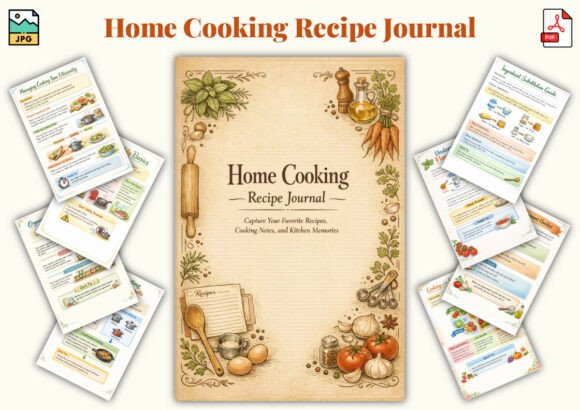
Most home cooks rely on memory, social media saves, or scattered notes. The Home Cooking Recipe Journal replaces that fragmented system with a single, coherent workbook. Structurally, it is a 24-page workbook that combines educational content with practical recording sections. This dual purpose is key: it teaches while it organizes.
The journal includes educational cooking tips, ingredient explanations, and method guides alongside dedicated spaces for recipe recording, cooking reflections, and skill tracking. This design means that every time you use it, you are not just logging a meal—you are also reinforcing your understanding of fundamental techniques. Over several uses, the journal becomes a reference manual built from your own experience.
Where It Fits in a Broader Process
Think of this journal as the documentation layer in your personal cooking workflow. It complements other tools and resources you might already use:
- Meal planning apps or calendars: Use the journal to record the results of planned meals, noting what worked and what did not.
- Digital recipe collections: Instead of bookmarking dozens of online recipes, use the journal to test, adapt, and permanently record the versions you actually cook.
- Grocery lists and inventory systems: The journal helps you refine your shopping habits by tracking which ingredients you consistently use and which substitutions succeed.
- Cooking classes or online tutorials: After following a lesson, transfer the key techniques and your personalized adjustments into the journal for long-term retention.
This integration prevents duplication of effort. You do not need to maintain separate notes for techniques, reflections, and recipes. The workbook consolidates these functions into one place, saving time and mental energy.
Practical Use Before, During, and After Cooking
The Home Cooking Recipe Journal supports three distinct phases of the cooking process. Understanding each phase helps you maximize the journal's value.
Before Cooking: Planning and Preparation
The journal's structured sections allow you to preview new techniques and ingredients before you start cooking. The educational diagrams and method explanations act as a quick reference, reducing the need to search for information mid-recipe. Use the ingredient explanation pages to research substitutions or unfamiliar terms before you shop.
For productivity-minded users, this pre-cooking phase aligns with project planning. You can review your personal cooking goals and skill tracking pages to decide which technique you want to practice during the upcoming session. This intentional approach turns a routine meal into a deliberate learning opportunity.
During Cooking: Real-Time Recording
The recipe recording pages are designed for use while you cook. The infographic layout guides you to note quantities, timings, and visual cues without breaking your flow. Hand-drawn icons and soft highlight boxes make it easy to scan your notes quickly.
This real-time recording is particularly valuable for food bloggers, content creators, and educators who need accurate records for later publication or teaching. Instead of relying on memory or hastily typed phone notes, you capture details exactly as they happen. The clean page structure minimizes clutter, so your notes remain legible and useful.
After Cooking: Reflection and Iteration
The cooking reflections and improvement checklists are where the journal delivers long-term value. After a meal, you can quickly assess what went well and what could change. This structured reflection transforms cooking from a series of isolated events into an iterative improvement process.
For example, a freelance writer or entrepreneur might use this section to note time-saving techniques discovered during meal prep. A busy professional can track which recipes fit within a 30-minute window and which require weekend preparation. Over time, these notes form a personalized efficiency guide.
Implementation Tips for Different Users
Adopting a new workbook requires minimal friction to become a consistent habit. Here are practical ways to integrate the Home Cooking Recipe Journal into your routine based on common use cases.
For Professionals and Entrepreneurs
Time is a limited resource. Use the journal exclusively for recipes you make at least three times. This filters out noise and ensures your notes are only on high-value meals. Keep the journal in the kitchen near your prep area. The moment you finish plating, spend two minutes filling out the reflection section. This small habit compounds into a robust personal cookbook within a few months.
For Creators, Bloggers, and Educators
The journal serves as content research material. When you test a new dish, use the educational pages to document not just the recipe but the principles behind it. These notes can directly feed into blog posts, social media captions, or lesson plans. The hand-drawn icon style and pastel highlight boxes also provide visual inspiration for your own design work or content aesthetics.
For Hobbyists and Productivity-Minded Users
Use the favorite recipe collection pages to build a curated list of your top meals. This serves as a quick decision tool on busy days. The personal cooking goals and skill tracking pages work like a project roadmap. Set a specific goal each month—such as mastering a new knife cut or cooking with a new grain—and track your progress in the journal. The physical act of writing reinforces commitment.
Factors That Support Long-Term Use
Several design and structural choices make this journal suitable for ongoing integration into a busy life.
Usability and Organization
The journal is 24 pages, which is substantial enough to hold meaningful content but not so large that it becomes intimidating. Each section has a clear purpose, and the infographic layout guides the eye naturally. You do not have to invent a system; the workbook provides one. This reduces the initial effort required to start.
Quality Control and Consistency
Because the journal includes educational diagrams and method explanations, you are less likely to omit important details when recording. The structure enforces consistency across entries. This is particularly useful if you are sharing recipes with others or trying to replicate results precisely. Over time, this consistency improves the quality of your cooking because you can reliably reproduce successes.
Compatibility with Other Systems
The journal does not require you to abandon digital tools. Use it as the analog center of a hybrid system. Snap photos of completed pages and file them in a cloud folder. Transfer key recipes to a digital format if needed. The journal works as the original source of truth, while digital copies serve as backups or sharing tools.
Observations on Skill Development and Efficiency
One of the less obvious benefits of a structured cooking journal is the way it accelerates skill development. The act of writing down techniques and reflections forces you to articulate what you have learned. This encoding improves retention compared to simply cooking repeatedly without review.
For example, a small business owner who cooks to manage stress might find that reflecting on a successful meal reinforces positive habits. A marketing professional who entertains clients at home can use the journal to refine a set of go-to recipes that consistently perform well. Over time, the journal becomes a record of proven workflows.
Efficiency improves because the journal eliminates the need to search for past recipes or remember adjustments. When you want to recreate a dish, you have a clear, tested record. This reduces wasted ingredients, cooking time, and decision fatigue.
Integrating the Journal into a Broader Workflow
Consider the journal as one node in your personal productivity ecosystem. It interacts with other resources and decisions in several ways:
- Meal prep routines: Use the journal to document weekly prep sessions, noting which tasks saved time and which added unnecessary complexity.
- Seasonal ingredient decisions: The ingredient explanation pages help you understand why certain substitutions work, making it easier to adapt recipes to what is available.
- Family or shared cooking: If you cook with others, the journal provides a shared reference. Everyone can see the recorded adjustments and cooking notes, reducing miscommunication.
- Goal tracking: The skill tracking section connects directly to your broader personal development goals. Cooking skill improvement is a tangible, measurable outcome.
This integration does not require a complex setup. Simply keep the journal accessible and use it as the default capture tool for anything cooking-related. Within a few weeks, it becomes a natural part of your routine.
Getting Started Without Overcomplicating It
The most effective way to begin using the Home Cooking Recipe Journal is to start small. Choose one recipe you cook regularly. Use the recipe recording page to document your exact process and ingredient amounts. Then, after eating, fill out the reflection section with one thing you would change and one thing you would repeat.
That single cycle demonstrates the journal's value immediately. You have created a record that can be reused and improved. The next time you cook the same dish, refer back to your notes. Adjust based on your reflection. Over several cycles, you develop a version of the recipe that is optimized for your taste, schedule, and skill level.
This approach respects your existing workflow. It does not demand extra time or effort upfront. Instead, it layers into what you already do, making the process more organized and more rewarding over time.
Conclusion
The Home Cooking Recipe Journal is a practical, thoughtfully designed workbook that helps home cooks move from scattered experimentation to organized skill building. Its educational infographic layout, guided sections, and visual clarity make it easy to integrate into a busy routine. Whether you are a professional, creator, or hobbyist, the journal provides a structured way to capture insights, track progress, and build a personal collection of tested, reliable recipes. By making documentation simple and consistent, it turns everyday cooking into a system for continuous improvement.