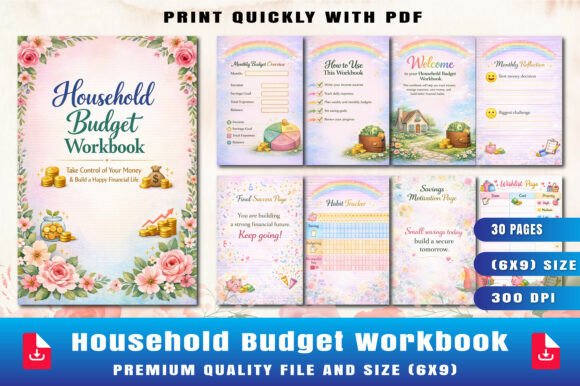
Household Budget Workbook: A Practical Tool for Organized Personal Finance
Managing personal finances often feels like juggling multiple priorities at once. Between tracking income, monitoring expenses, setting aside savings, and planning for future goals, even motivated individuals can struggle to maintain a clear picture of their financial health. The Household Budget Workbook offers a structured approach to bringing order to this process. Designed as a 30-page planner with soft pastel colors, clean layouts, and practical tracking pages, this workbook aims to make budgeting both systematic and visually engaging. Whether you use it digitally or as a printable, it provides a framework for understanding where your money goes and how to align your spending with your priorities.
What Is the Household Budget Workbook?
At its core, the Household Budget Workbook is a printable and digital planner that helps individuals and families organize their finances across multiple dimensions. It includes pages for monthly budget overviews, daily and weekly expense tracking, household fixed and variable expense logs, savings goals and emergency fund trackers, bill payment and subscription logs, financial goals and reflection pages, and budget review and habit tracking. The workbook is delivered as high-quality JPG files and a print-ready PDF, with each page sized at 6 × 9 inches. The colorful layouts and decorative icons are intended to make the process of budgeting feel less like a chore and more like a productive routine.
Why Consider a Structured Budgeting Workbook?
Many people start the year with good intentions about managing money but find that without a consistent system, those intentions fade. A structured workbook provides a tangible or digital space to record and review financial data regularly. The Household Budget Workbook addresses this by offering dedicated sections for different aspects of financial management. Instead of relying on scattered notes or memory, users have a single place to log income, track spending categories, monitor bill due dates, and measure progress toward savings targets. This kind of organization can reduce the cognitive load of managing finances and make it easier to spot patterns or areas where adjustments are needed.
Another reason people turn to such workbooks is the desire for visual clarity. Seeing expenses broken down by category, or watching a savings goal tracker fill up over time, can provide motivation and a sense of control. The colorful design of this workbook, with pastel tones and icons, is meant to support that visual appeal without being overwhelming. For those who have tried budgeting apps and found them impersonal or distracting, a workbook format can feel more intentional and reflective.
Benefits of the Household Budget Workbook
The workbook includes several features that support organized financial management. The monthly budget overview pages allow you to set income and spending targets for each month, while the daily and weekly expense trackers help capture transactions as they happen. This combination of big-picture planning and granular tracking is helpful for understanding whether your actual spending matches your intentions.
The separate logs for fixed and variable household expenses make it easier to distinguish between necessary recurring costs and discretionary spending. This distinction is often the first step in identifying where to cut back if needed. The savings goal and emergency fund trackers provide a visual way to monitor progress toward specific financial milestones, which can be encouraging over time.
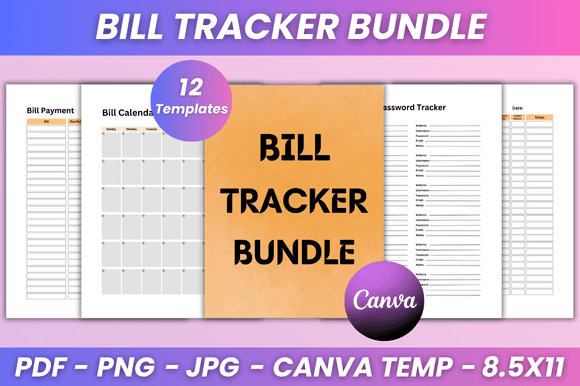
Bill payment and subscription trackers help you avoid late fees and forgotten renewals. With many households managing multiple streaming services, software subscriptions, and recurring bills, having a dedicated log can save both money and stress. The financial goals and reflection pages encourage periodic check-ins, which many financial advisors recommend as a way to stay aligned with long-term objectives. Finally, the budget review and habit tracker helps you build consistency by monitoring how well you stick to your plan each week or month.
Because the workbook is delivered as digital files, you have flexibility in how you use it. You can print the pages and use them with a pen or pencil, or you can import the JPG or PDF into a note-taking app and fill them out digitally. This adaptability makes it suitable for a range of workflows, from paper-based planning to tablet-based organization.
Tradeoffs and Practical Considerations
While the Household Budget Workbook offers many useful features, it is worth considering some tradeoffs. The 6 × 9 inch page size is smaller than standard letter or A4 paper, which may feel cramped if you have many line items to record. If you prefer more space for writing or detailed categories, you might need to adjust your approach or use supplementary pages.
The workbook contains 30 pages, which is a manageable number for a month or two of detailed tracking, but it may not cover an entire year if you print it as a single booklet. For long-term use, you would likely need to print multiple copies or supplement with additional pages for months beyond the initial set. This is not a limitation unique to this product, but it is something to plan for if you want continuous tracking over many months.
The colorful pastel design with decorative icons may not appeal to everyone. Some users prefer a more minimal or monochrome layout that feels more professional or less distracting. If visual simplicity is a priority, the design elements of this workbook might feel busy. However, for those who enjoy a cheerful and engaging aesthetic, the colors can make budgeting feel more approachable.
Another consideration is the format. Since the workbook is delivered as digital files, you are responsible for printing or digital setup. If you are looking for a pre-bound physical planner that arrives ready to use, this product requires an extra step. On the other hand, the digital delivery gives you the freedom to print only the pages you need, in the quantities you need, and to use them in whatever way fits your routine.
Who Is This Workbook a Strong Fit For?
The Household Budget Workbook is well suited for individuals or families who want a structured and visually engaging way to track their finances. It is particularly helpful for people who are new to budgeting and want a ready-made framework rather than building one from scratch. The combination of monthly overviews, daily logs, and savings trackers covers the basics thoroughly, making it a good starting point for building financial awareness.
People who enjoy using planners, bullet journals, or printable organizers are likely to appreciate the layout and design. The workbook also works well for those who prefer to keep their financial data offline or away from apps, whether for privacy reasons or simply because they find paper-based tracking more effective. If you like the idea of reviewing your budget weekly and reflecting on your progress, the habit tracker and review pages will support that routine.
Additionally, this workbook can serve as a useful tool for financial coaches, counselors, or educators who work with clients on budgeting basics. The clear categories and simple layout make it easy to explain and use in a teaching context.
When Alternatives May Be Worth Considering
If you require a budgeting system that covers an entire year in one bound volume, you might prefer a traditional annual planner with dedicated budget pages. Similarly, if you need very detailed categories for complex finances, such as multiple business income streams, investment tracking, or debt payoff calculations, a more specialized spreadsheet or app might offer the flexibility you need.
People who strongly prefer digital automation may find a workbook less convenient than a budgeting app that syncs with bank accounts and categorizes transactions automatically. While the workbook encourages active engagement with your finances, it does require manual entry and regular upkeep. For those who find data entry tedious or who want real-time insights, an app-based approach could be more efficient.
If the pastel aesthetic does not suit your taste, or if you need a larger page size for detailed writing, many other budgeting workbooks and printable templates are available with different styles and dimensions. The key is to choose a format that you will actually use consistently.
Practical Decision-Making Insights
Before committing to the Household Budget Workbook, think about your current budgeting habits and what you hope to improve. If you have no system at all, this workbook provides a comprehensive starting point. If you already use a basic tracking method and want to add more structure, the dedicated logs for savings, bills, and goals can fill specific gaps.
Consider trying a single printed month of the workbook before deciding if it works for you. Since the files are digital, you can print a few pages to test the layout and see if the size and design suit your workflow. This low-cost trial can help you avoid investing time in a system that does not fit your preferences.
Ask yourself whether you prefer a guided format or a blank canvas. This workbook offers guided prompts and pre-labeled categories, which is helpful if you want direction. If you prefer to design your own categories and layouts, a blank notebook or a customizable spreadsheet might be more flexible.
Also consider how you will use the workbook over time. If you plan to track finances for the long term, you will need a method for storing and referencing past months. Some users bind printed pages into a three-ring binder or use a digital folder system. Planning for this in advance can make sustained use easier.
Aligning the Workbook With Your Financial Goals
Ultimately, the value of any budgeting tool depends on whether it helps you take consistent action toward your financial goals. The Household Budget Workbook provides a clear structure for tracking income, expenses, savings, and bills, all within a visually pleasant format. If you are looking for a system that encourages regular engagement with your finances without relying on screens or automation, this workbook is worth evaluating. Its strengths lie in its organized layout, comprehensive tracking categories, and flexible digital delivery. By considering your personal preferences, the scale of your financial tracking needs, and your willingness to maintain manual entries, you can determine whether this colorful planner aligns with the way you want to manage your money.